
Thrush in Horses: Treatment & Prevention
25th Aug 2026
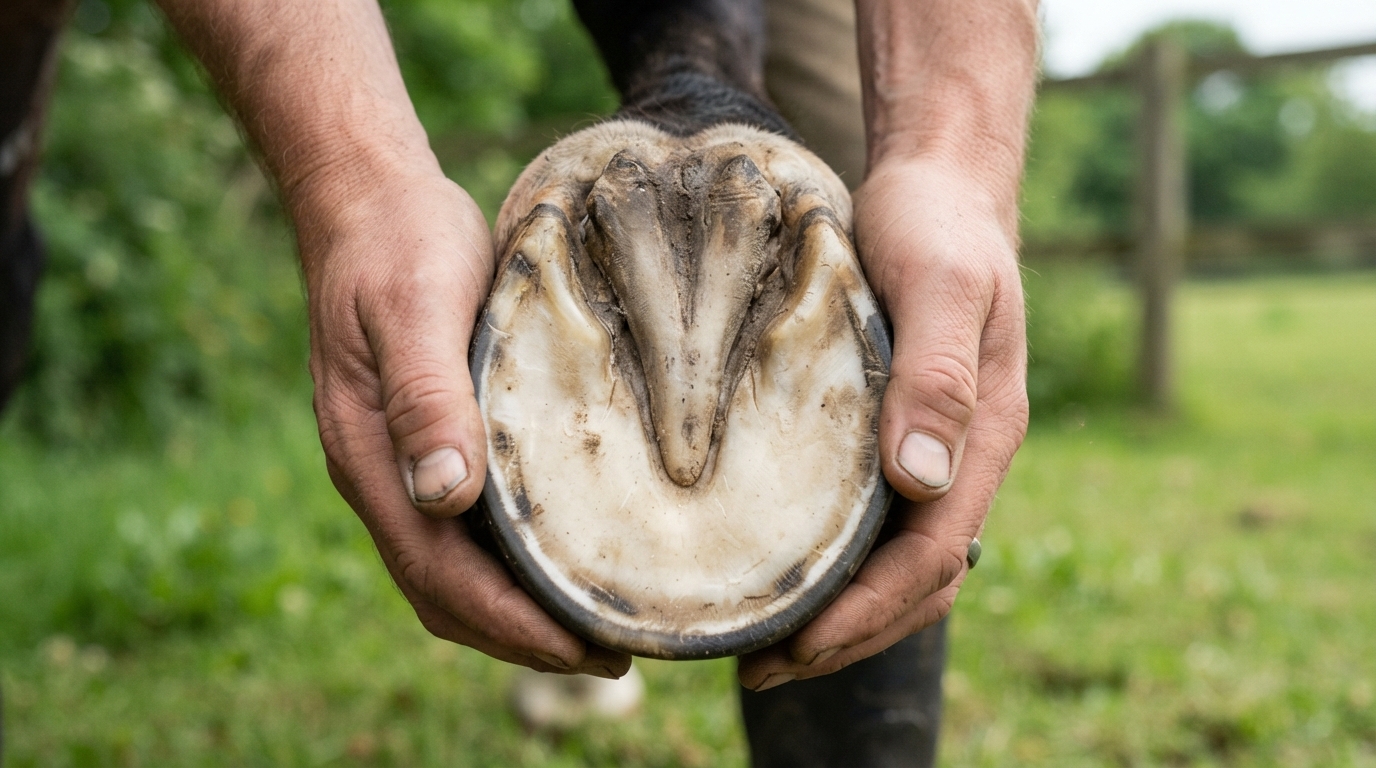
Picked up your horse's hoof and caught a whiff of something unpleasant, along with a black, oily residue around the frog? That's almost always thrush in horses, one of the most common hoof issues owners come across, especially through wet winter months.
The good news is that thrush in horses responds really well to prompt, consistent care, and most cases clear up within one to two weeks with simple treatment at home.
At Scone Equine Group, we see thrush regularly, particularly after stretches of wet weather. Here's how to spot it, what horse hoof thrush treatment involves, and how to keep it from coming back.
Key Takeaways
- Thrush in horses is a bacterial infection of the frog, often linked to wet, dirty conditions and reduced hoof movement.
- The clearest signs are a strong odour and dark, oily discharge in the grooves on either side of the frog.
- Horse hoof thrush treatment centres on daily cleaning, removing dead tissue, and keeping the hoof dry.
- Most mild to moderate cases clear up within one to two weeks with consistent home care.
- Good thrush prevention for horses comes down to clean bedding, regular hoof picking, and a solid trimming schedule.
What is Thrush in Horses?
Thrush is a bacterial infection that affects frogs, usually in the grooves running along the sides and down the middle of their bodies. It's caused by anaerobic bacteria, meaning they thrive in low-oxygen environments like a hoof packed with mud, manure, or wet bedding.
It's one of the most common conditions vets and farriers see, and it can affect any horse, from paddock ponies to competition horses in full work.
What Causes Thrush?
A few everyday conditions make thrush more likely to develop:
- Standing for long periods on wet, soiled bedding or muddy, waterlogged paddocks
- Infrequent hoof picking, which lets moisture and debris build up in the sulci
- Overgrown or poorly balanced hooves, which create deeper grooves for bacteria to hide in
- Naturally deep sulci or contracted heels, which some horses are simply more prone to
- Reduced exercise, since movement helps hooves clean themselves naturally
Signs of Thrush in Horses
Thrush is usually easy to identify once you know what to look for. Common signs include:
- A strong, unpleasant smell coming from the hoof
- Black or dark oily discharge in the grooves beside or down the centre of the frog
- Soft, ragged, or crumbly frog tissue
- Occasional sensitivity when the frog is touched with a hoof pick
Most horses with thrush aren't lame, though more advanced cases that reach deeper tissue can cause tenderness. If you notice ongoing sensitivity alongside the usual signs, it's worth involving your vet or farrier to check how deep the infection has gone.
Catching thrush early makes a real difference. A quick check during your daily pick-out is often all it takes to spot the first signs before they progress.
Horse Hoof Thrush Treatment: Step by Step
The right horse hoof thrush treatment is usually simple, and most owners can manage mild cases confidently at home.
1. Clean the Hoof Thoroughly
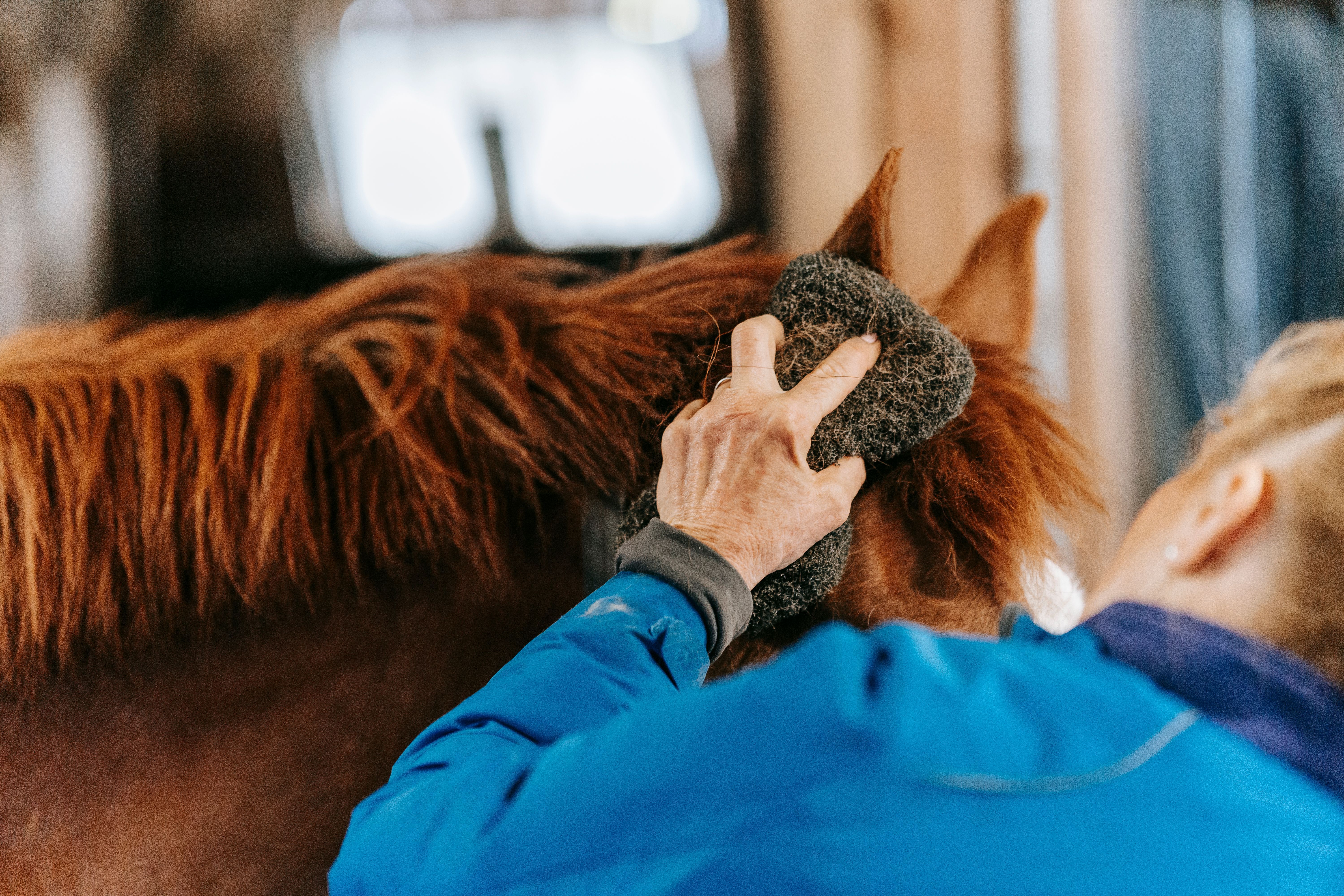
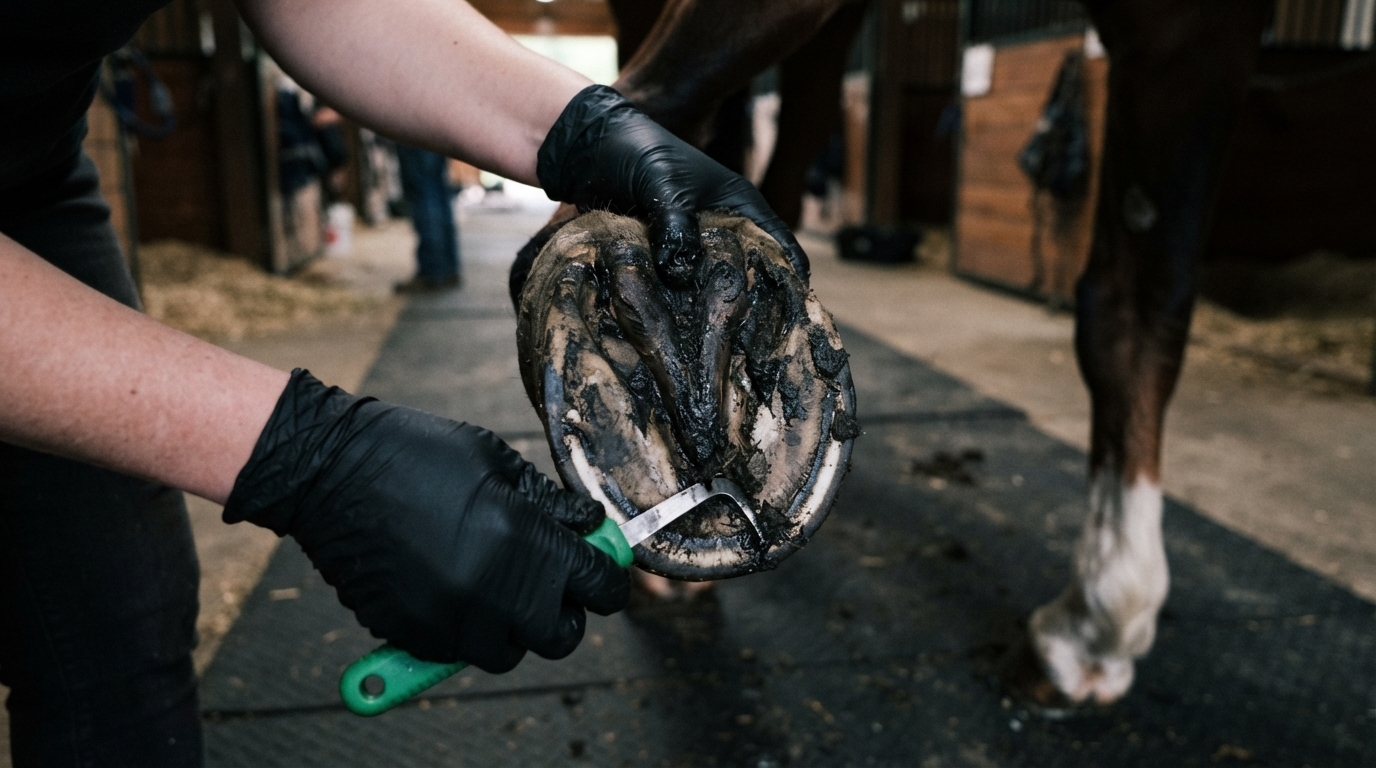
Pick out all dirt, manure, and debris from the sulci, working right into the grooves beside and underneath the frog.
2. Trim Away Loose Tissue
Gently remove any ragged or crumbly frog material so that treatment products can properly reach the infected area. For deeper or more established cases, your farrier or vet may need to trim away more extensive dead tissue.
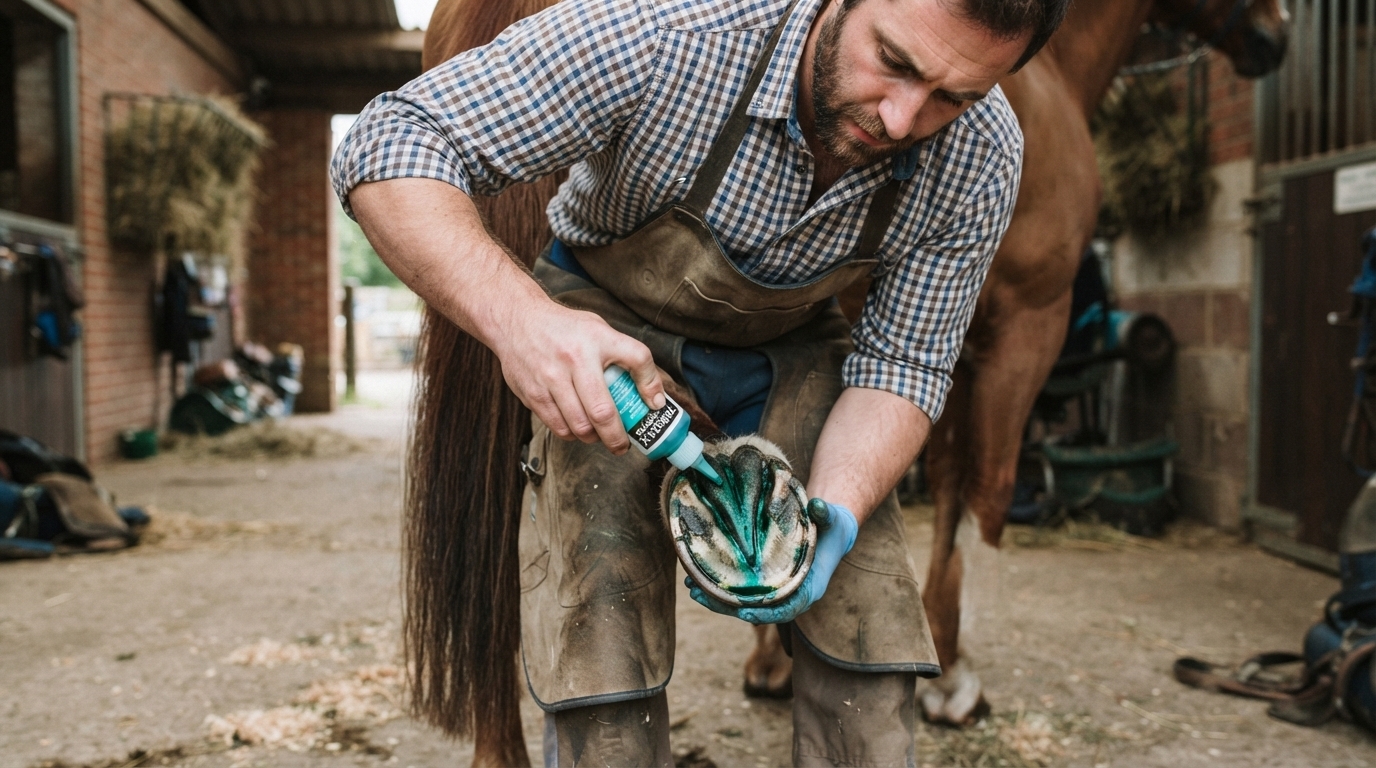
3. Apply a Treatment Product
A dedicated antiseptic spray, such as cetrigen aerosol, helps disinfect the area and supports healthy tissue regrowth. Apply as directed, usually daily, until the smell and discharge resolve.
4. Keep the Hoof Dry
Move your horse to a clean, dry area while treating thrush, since damp conditions can undo much of the good work of cleaning and treatment.
5. Recheck Progress Regularly
Most mild cases show real improvement within a week. If thrush isn't clearing up, or your horse becomes lame, a vet or farrier visit helps rule out deeper involvement and adjust the plan.
Thrush Prevention in Horses
Once you've cleared up a case of thrush, a few consistent habits make a real difference in keeping it from returning. Good thrush prevention is mostly about consistency, not complicated routines:
- Pick hooves daily. Regular hoof care removes the mud, manure, and debris that let bacteria take hold in the first place.
- Keep bedding and yards clean. Removing wet, soiled bedding regularly reduces the damp conditions thrush needs to develop.
- Stick to a trimming schedule. Well-balanced hooves have shallower, easier-to-clean grooves, so regular visits from your farrier genuinely help.
- Use hoof boots thoughtfully. Horse hoof boots are brilliant for protection on rocky ground or during transitions, but give hooves time out of them each day so moisture doesn't build up underneath.
- Support hoof strength from within. Along with good hygiene, hoof health supplements can help build stronger, more resilient hoof horn over time.
Encouraging regular movement helps too, since a horse that's out and about naturally cleans its own hooves far more effectively than one standing still.
Find Horse Vet Supplies Online
Thrush in horses is common, and with a bit of consistent care, most horses bounce back quickly without any lasting issues. Keeping the right cleaning and treatment products on hand makes it so much easier to jump on it the moment you spot it.
Find horse vet supplies online at Scone Equine Group and keep your hoof care kit ready for whatever the season throws at you.