
Sarcoids in Horses: Identifying & Treating
25th Aug 2026
If you've found a strange, wart-like lump on your horse that doesn't seem to be healing, there's a good chance you're looking at a sarcoid. Sarcoids in horses are the most common skin growths vets see, occurring in somewhere between 2 and 10% of horses over their lifetimes.
Luckily, sarcoids don't spread to internal organs, and most horses go on to live full, comfortable lives alongside them with the right approach.
At Scone Equine Group, we help owners spot sarcoids early and choose a treatment path that suits their horse. Here's what to look for, and what treatment for sarcoids in horses usually involves.
Key Takeaways
- Sarcoids in horses are the most common skin tumour in the species, linked to bovine papillomavirus (BPV) and thought to spread partly through flies.
- They appear in several forms, from flat, easy-to-miss patches to raised, wart-like or fleshy growths.
- Sarcoids don't spread internally, though they can grow or multiply locally if disturbed.
- There's no single best treatment for sarcoids in horses. Your vet will choose an approach based on the type, location and your horse's temperament.
- Early identification and gentle handling give the best long-term results.
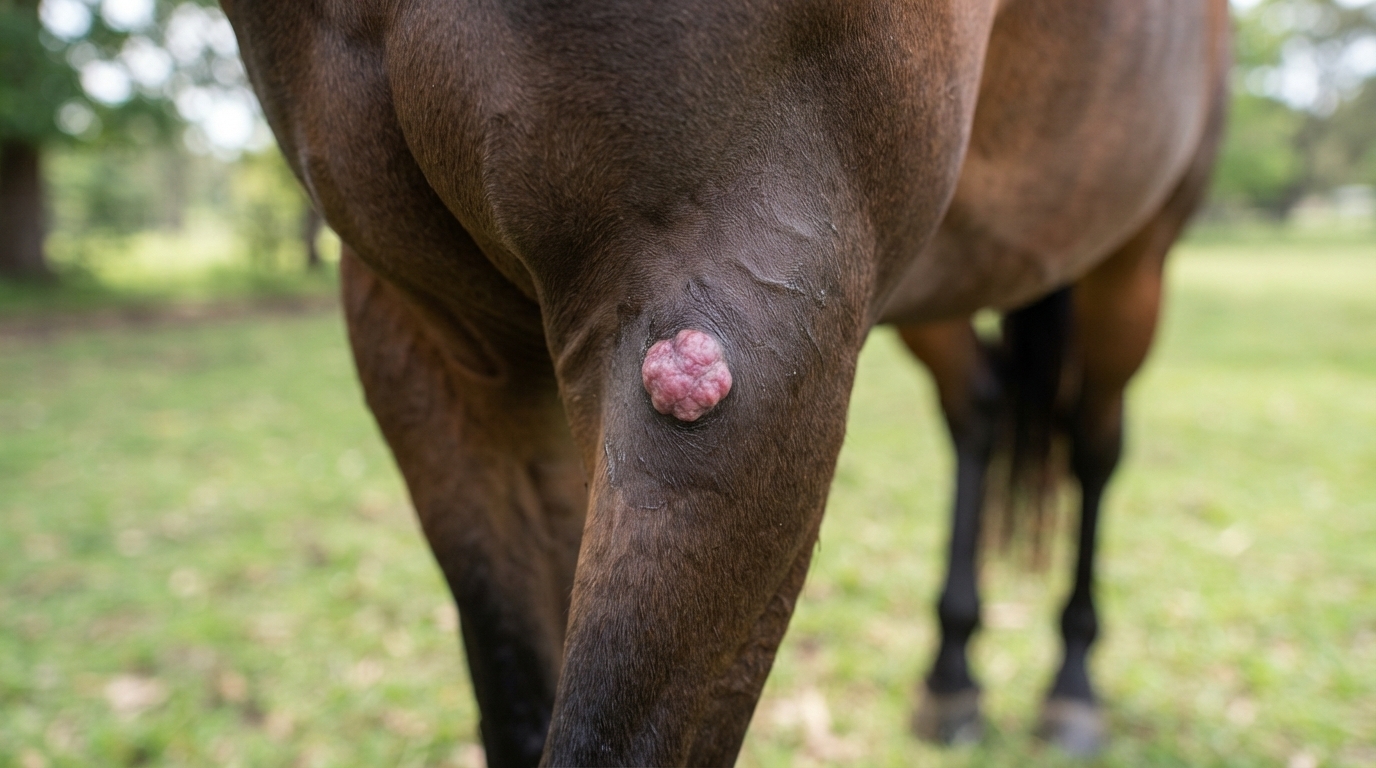
What are Sarcoids in Horses?
Sarcoids are locally invasive skin tumours, and they're the most frequently diagnosed tumour type in horses. They typically show up in horses between one and seven years old, though they can develop at any age.
The good news is that sarcoids in horses don't spread to internal organs the way some cancers do. They can, however, grow larger or multiply on the skin if irritated or interfered with, which is why gentle management matters from the start.
What Causes Sarcoids?
Researchers link sarcoid development to bovine papillomavirus (BPV), particularly types 1, 2 and 13. A few other factors are thought to play a role, too:
- Flies, suspected of carrying the virus between horses, are part of why fly control is a useful habit
- Genetics, with some horses or bloodlines more prone than others
- Skin trauma, such as old wounds or scarring, which can provide an entry point
Types of Sarcoids in Horses
Vets generally group sarcoids into six types. Knowing the differences helps explain why your vet might suggest different approaches for different lumps:
- Occult: flat, subtle patches, easy to mistake for a rub mark or old scar
- Verrucous: wart-like, scaly and slow-growing, similar in look to ringworm
- Nodular: firm, round lumps under otherwise normal skin
- Fibroblastic: fleshy, raised growths with a moist surface that can bleed easily
- Mixed: a combination of two or more types in the same area
- Malignant: a rarer form that spreads along the skin and lymph vessels
How to Identify Sarcoids in Horses
Sarcoids tend to favour areas with thin skin or lots of movement, including the eyes, sheath, groin, armpits, and lower legs. Keep an eye out for:
- A lump or patch that isn't healing like a normal wound
- Hairless or scaly skin that looks slightly "off"
- A wart-like cluster that keeps growing rather than resolving
- A moist, fleshy growth that bleeds easily when knocked
Most vets diagnose sarcoids by appearance and location, along with your horse's history. Biopsies are usually avoided unless there's real uncertainty, since sampling can occasionally encourage growth. If you spot a new or changing lump, a vet visit helps you start the right sarcoids in horses treatment plan sooner.
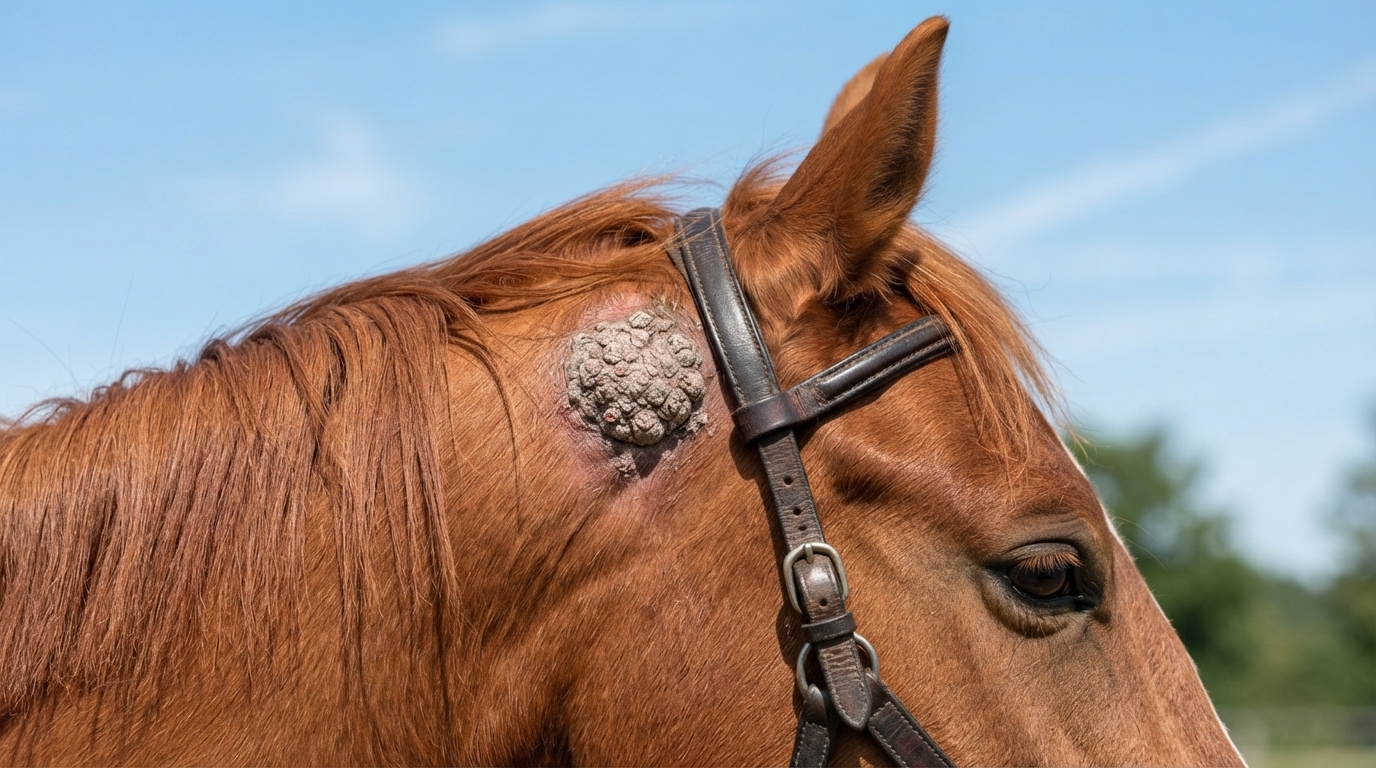
Sarcoids in Horses Treatment: What to Expect
There isn't a single best treatment for every case of sarcoid, which is completely normal in equine medicine. Your vet weighs up the type, size and location of the sarcoid, along with your horse's temperament and your budget, before recommending a plan. Options include:
Topical Treatments
Creams applied directly to the sarcoid can work well for smaller or flatter types, stimulating a local immune response over several weeks of veterinary-guided use.
Cryotherapy
Freezing the sarcoid tissue, usually performed by a vet, can be effective for smaller growths in accessible locations.
Surgical or Laser Removal
Complete removal offers the best chance that the sarcoid will not return, so vets take care to remove the entire growth, including any finger-like extensions under the skin. Laser surgery is available at some specialist and university clinics.
Ligation (Banding)
For sarcoids with a narrow stalk, a tight band can cut off blood supply, so the growth gradually shrinks and drops off.
Advanced Options
Referral hospitals may offer treatments such as intralesional chemotherapy or radiation therapy for more complex or stubborn cases.
Whichever path your vet recommends, sticking closely to their aftercare instructions gives your horse the smoothest recovery.
Supporting Your Horse Every Day
A few simple habits go a long way toward keeping sarcoids in horses from developing or coming back:
- Stay on top of fly control. A good fly repellent reduces one of the main ways the virus is thought to spread between horses.
- Groom regularly. Daily horse grooming gives you time to check your horse's skin, so new lumps get noticed early.
- Support healthy skin and coat. A quality horse coat supplement helps keep skin resilient and comfortable year-round.
- Care for any wounds properly. If your horse is recovering after sarcoid removal, a gentle cream for horse wounds supports healing while keeping the area clean.
Get the Right Support for Your Horse's Skin
Sarcoids are common, and most horses manage beautifully with early attention and the right treatment plan alongside your vet. Having quality skin care and grooming products on hand makes it easier to stay ahead of any changes.
View equine vet supplies at Scone Equine Group and keep everything you need for your horse's skin health within easy reach.