
Rain Scald (Rainrot) in Horses: Treatment & Prevention
25th Aug 2026
Rain scald, also known as rainrot, is one of the most common skin complaints Australian horse owners deal with, especially after a stretch of wet weather.
The rain scald in horses is caused by bacteria called Dermatophilus congolensis, and while it looks alarming with its crusty scabs and patchy hair, it's very manageable once you know what to do.
This guide covers what causes rain scald in horses, how to tell it apart from other skin conditions, horse rain scald treatment steps you can start today, and simple rain scald prevention habits to keep it from coming back.
Key Takeaways
- Rain scald is a bacterial skin infection linked to prolonged wet conditions, insect bites, and skin contact with infected horses or gear.
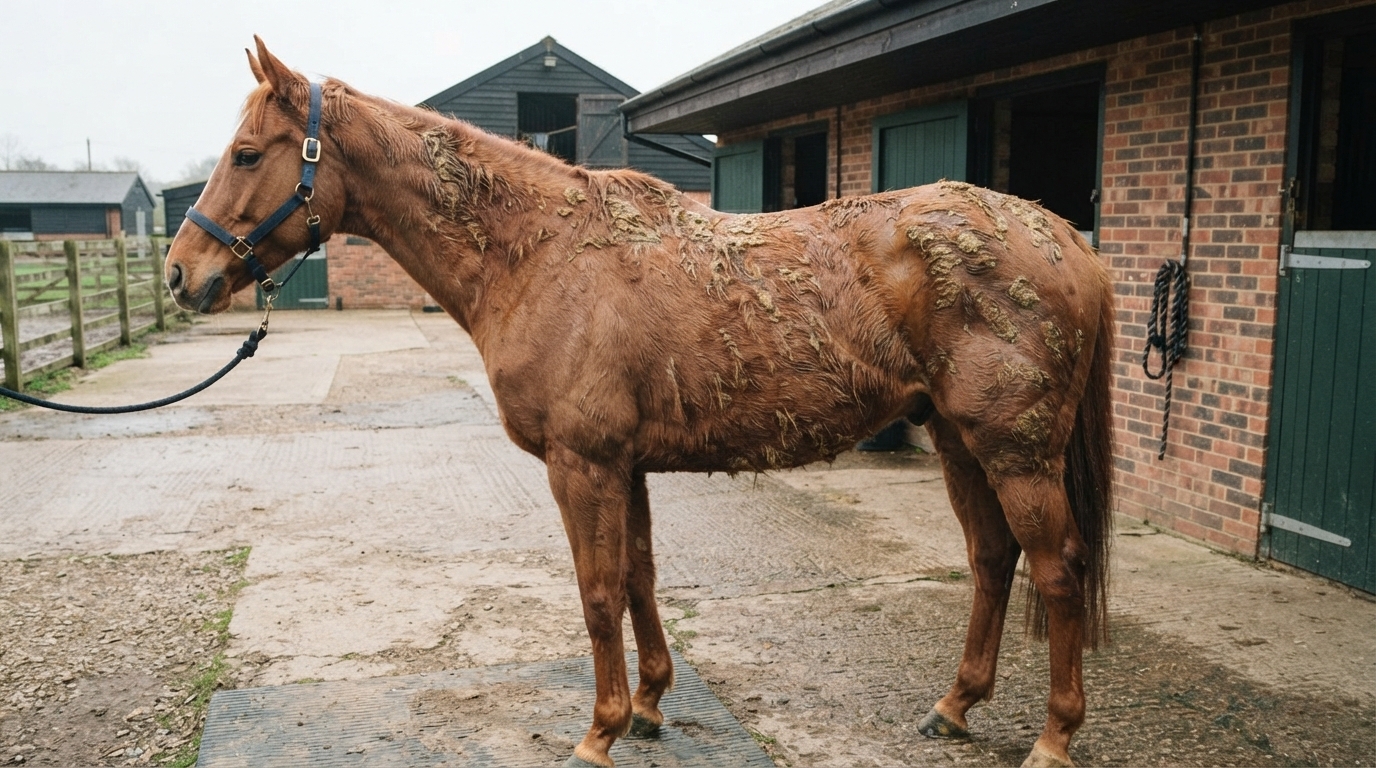
- It typically shows up as matted tufts of hair and crusty scabs along the back, rump, and legs.
- Horse rain scald treatment usually involves gentle grooming, medicated washing, and keeping the horse dry while it heals.
- Rain scald prevention comes down to providing shelter, controlling insects, and not sharing rugs, brushes, or tack between horses.
- Most cases clear up within one to two weeks, though it's worth involving your vet if things aren't improving.
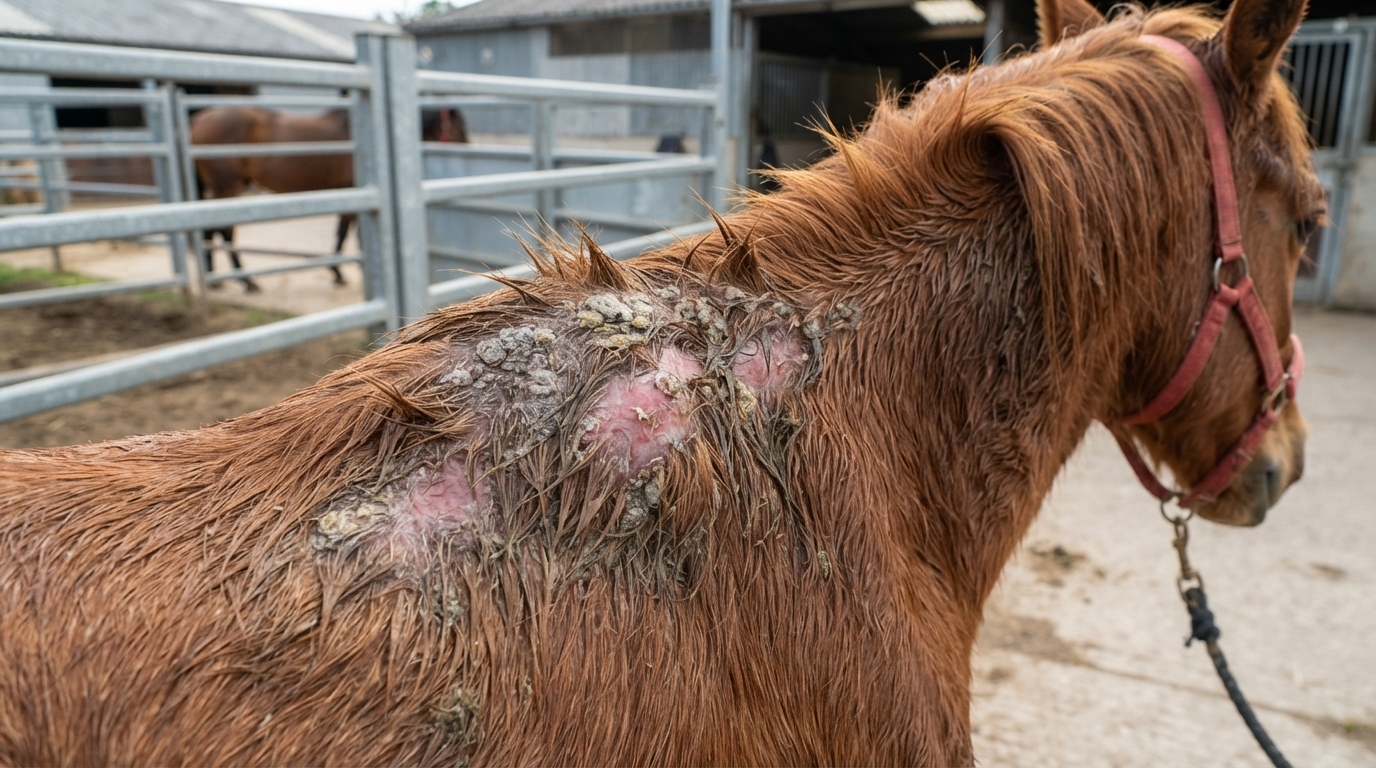
What Causes Rain Scald in Horses?
Rain scald takes hold when the skin stays wet for long periods, softening the skin's natural barrier and allowing bacteria to move in. It's the same organism responsible for mud fever, just affecting a different part of the body.
Common contributing factors include:
- Extended exposure to rain without shelter
- Biting insects, which can carry the bacteria between horses
- Contact with infected horses, rugs, brushes, or tack
- A compromised skin barrier from mud, sweat, or old wounds
Horses with thick winter coats are often hit hardest, since long hair traps moisture against the skin, creating an ideal environment for bacteria to thrive. The type of rain scald horses in southern Australia pick up over winter tends to be more severe than the milder summer form.
Is It Rain Scald or Ringworm?
Rain scald and ringworm are often mixed up, since both cause patchy hair loss and scabbing. The main difference is the cause: rain scald is bacterial, while ringworm is fungal. Ringworm tends to form more distinct, circular bald patches, often around the girth and saddle area.
Because the two conditions need slightly different approaches, it's worth reading our guide to ringworm in horses treatment if you're not certain which one you're dealing with. When in doubt, your vet can confirm the cause with a quick examination, which saves you from treating the wrong thing.
Horse Rain Scald Treatment: Step by Step
Most rain scalds clear up well with a simple, consistent routine at home.
1. Groom Gently First
Brush away loose hair and debris before washing. The skin underneath can be quite tender, so take it slowly and let your horse tell you how much pressure it can tolerate.
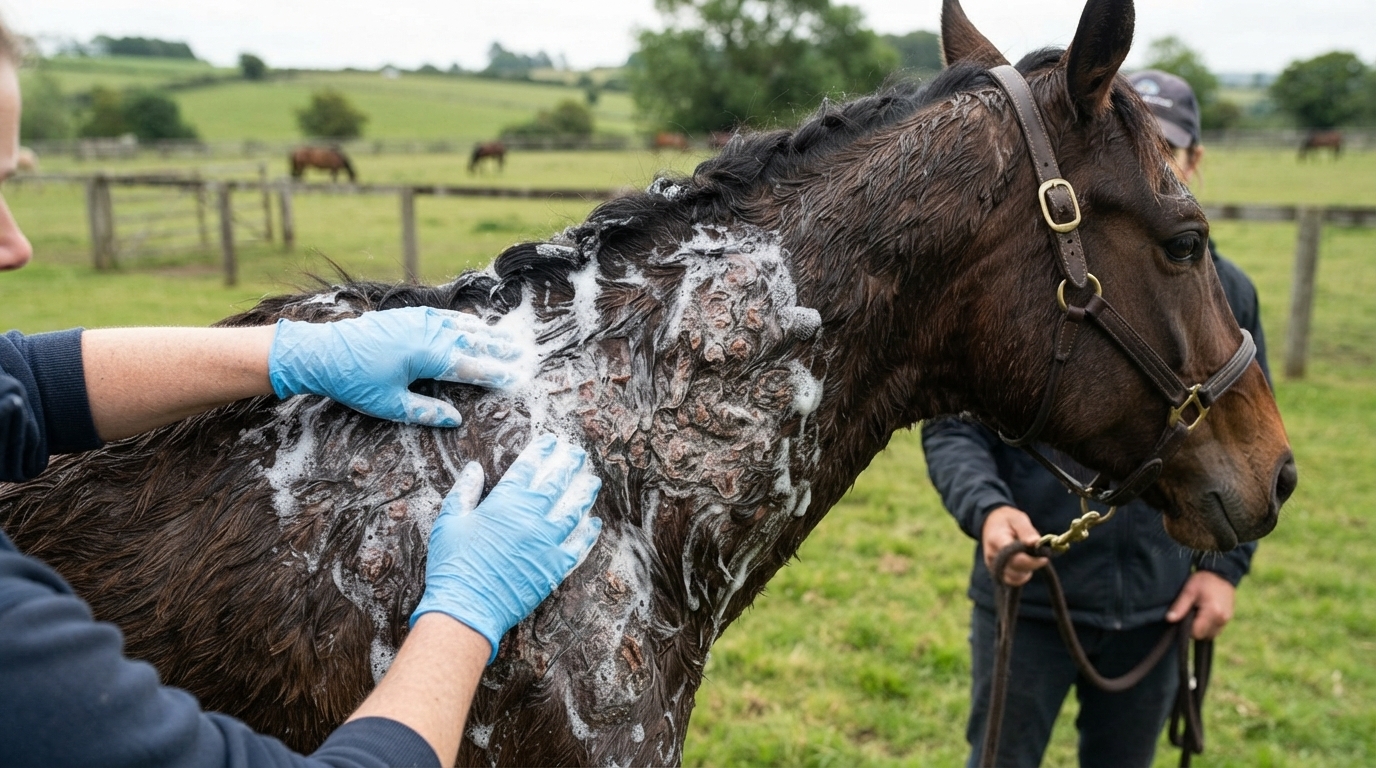
2. Wash with a Medicated Shampoo
A good medicated shampoo for horses helps lift scabs and calm the irritated skin underneath. Work it through the affected areas, leave it for a few minutes as directed, then rinse thoroughly.
3. Dry Completely
Towel dry or let your horse stand in the sun until fully dry. Bacteria thrive in damp conditions, so this step matters just as much as the wash itself.
4. Follow Up with an Antifungal Wash
Where scabs are stubborn or the area looks slow to heal, an antifungal wash for horses can help manage any secondary fungal involvement alongside the bacterial infection.
5. Keep the Area Dry Between Treatments
Rug your horse if rain is forecast, and avoid turning out into wet, muddy paddocks until the skin has settled and new hair starts coming through.
Repeat this routine every couple of days, and you should start seeing new hair growth within a week or so. More stubborn cases may take a little longer, particularly over winter.
Rain Scald Prevention Tips
Once you've dealt with a case of rain scald, a few habits go a long way toward keeping it from coming back:
- Provide dry shelter your horse can access whenever it rains
- Keep on top of insect control, since bites create easy entry points for bacteria
- Avoid sharing rugs, brushes, and tack between horses
- Check your horse's skin during daily grooming so you catch early signs quickly
- Keep a solid horse skin care routine going year-round, not just when problems appear
Good rain scald prevention is mostly about consistency. A horse that's kept dry, groomed regularly, and free from prolonged insect exposure is far less likely to develop it in the first place.
When to Call Your Vet
Most cases of rain scald resolve with consistent home care and aren't usually a serious welfare concern for your horse. That said, it's worth contacting your vet if:
- The affected area keeps spreading despite treatment
- Your horse seems increasingly uncomfortable or off its feed
- You notice swelling, heat, or discharge alongside the scabbing
- There's no improvement after a couple of weeks of treatment
Get the Right Skin Care Support
A well-stocked grooming kit makes rain scald much easier to manage the moment you spot it. Explore equine vet supplies at Scone Equine Group and find everything you need to keep your horse's skin healthy through every season.