
Queensland Itch in Horses | Causes, Treatment & Prevention
25th Aug 2026
Queensland itch in horses is one of the most common skin complaints Australian horse owners deal with every warmer season, and the good news is it's very manageable once you know what's driving it. It's an itchy, allergic skin reaction rather than an infection, which means a good routine can keep most horses comfortable all summer long.
At Scone Equine Group, our vets see Queensland itch in horses of every breed and age, especially once the weather warms up and midges become active.
Here's what causes it, what to look for, and how Queensland itch treatment usually works.
Key Takeaways
- Queensland itch in horses is an allergic reaction to the saliva of biting Culicoides midges, not an infection.
- It shows up most often around the mane, tail base, and sometimes the belly and face.
- Warm, humid weather and paddocks near dams or creeks tend to worsen the condition.
- Queensland itch treatment focuses on two things: reducing midge exposure and soothing irritated skin.
- There's no permanent cure, but consistent management keeps most horses comfortable season after season.
What is Queensland Itch in Horses?
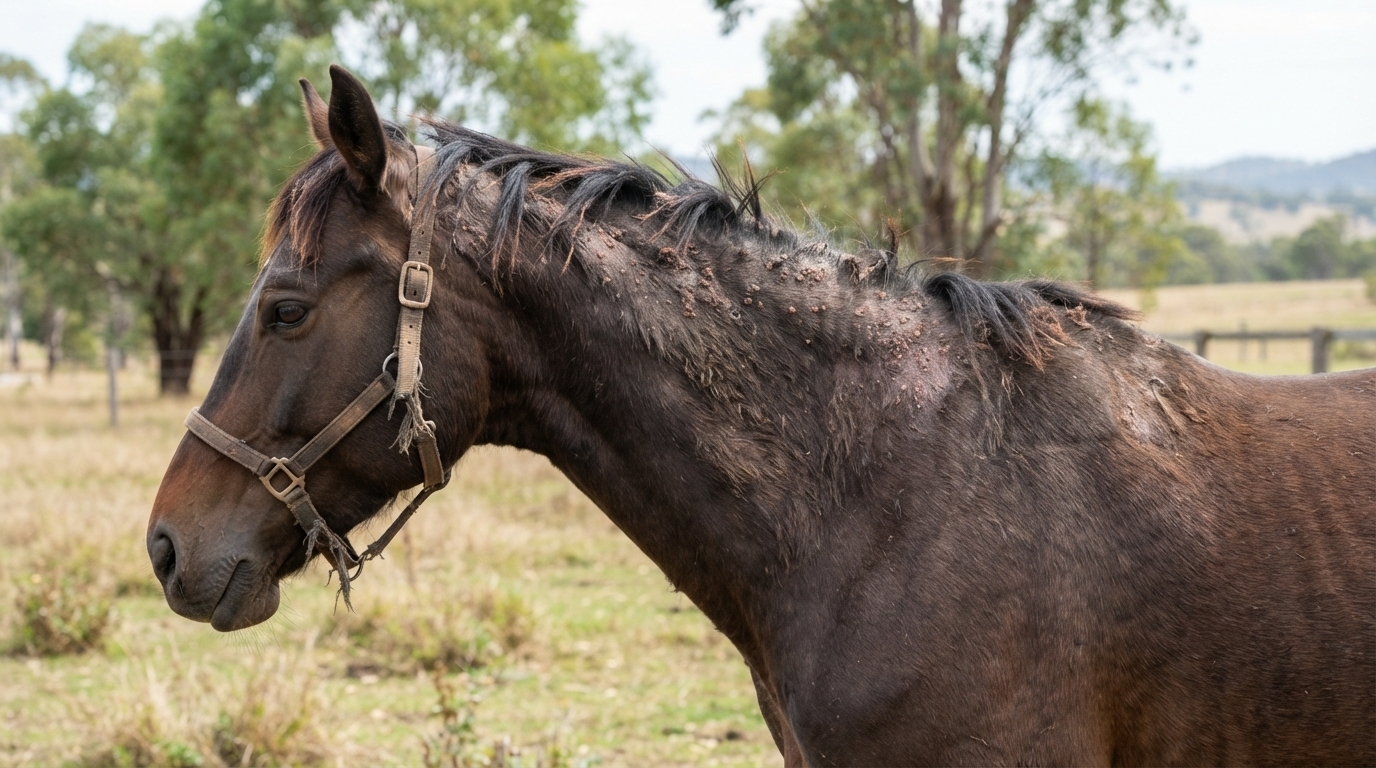
Queensland itch in horses, also known as sweet itch or insect bite hypersensitivity, is an allergic response to the saliva of biting Culicoides midges. When a sensitive horse is bitten, the immune system overreacts, triggering intense itchiness rather than just a normal insect bite reaction.
Not every horse exposed to midges develops Queensland itch. Some horses seem to tolerate bites just fine, while others become increasingly sensitive with repeated exposure over the years. Genetics play a role too, and some breeds and coat colours appear more prone than others.
What Causes Queensland Itch in Horses?
Queensland itch is driven by exposure to Culicoides midges, which are most active at dawn and dusk during the warmer months. A few factors tend to make things worse:
- Warm, humid weather, which suits midge breeding and activity
- Paddocks near dams, creeks, or still water, where midges breed in large numbers
- Long grass or sheltered areas that hold moisture and midges close to the ground
- Genetic sensitivity, with some horses reacting more strongly than others to the same level of exposure
Because midges are the trigger, keeping a reliable fly repellent like Flyaway on hand through the warmer months goes a long way toward reducing the number of bites your horse picks up.
Signs of Queensland Itch to Watch For
Queensland itch tends to follow a seasonal pattern, flaring up in summer and settling again once the weather cools. Common signs include:
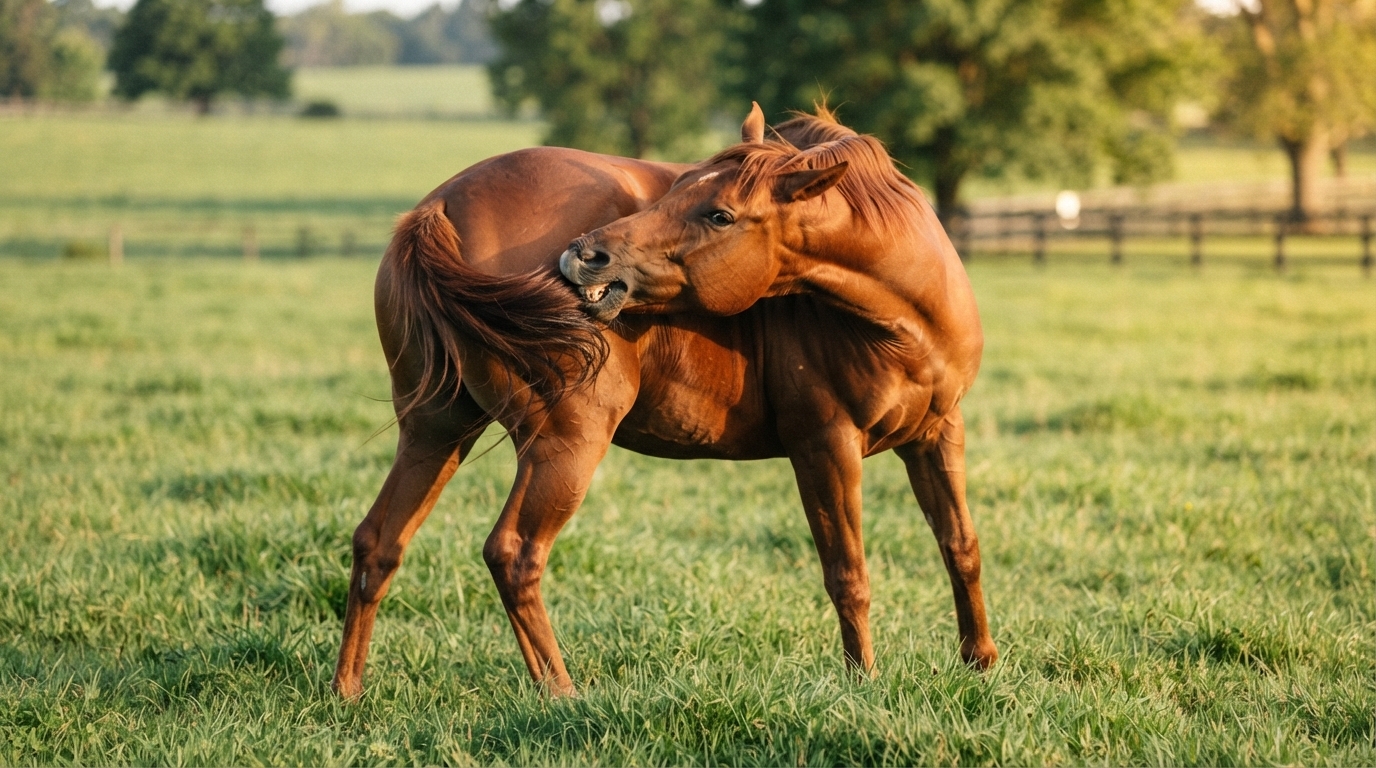
- Intense itching, particularly around the mane and tail base
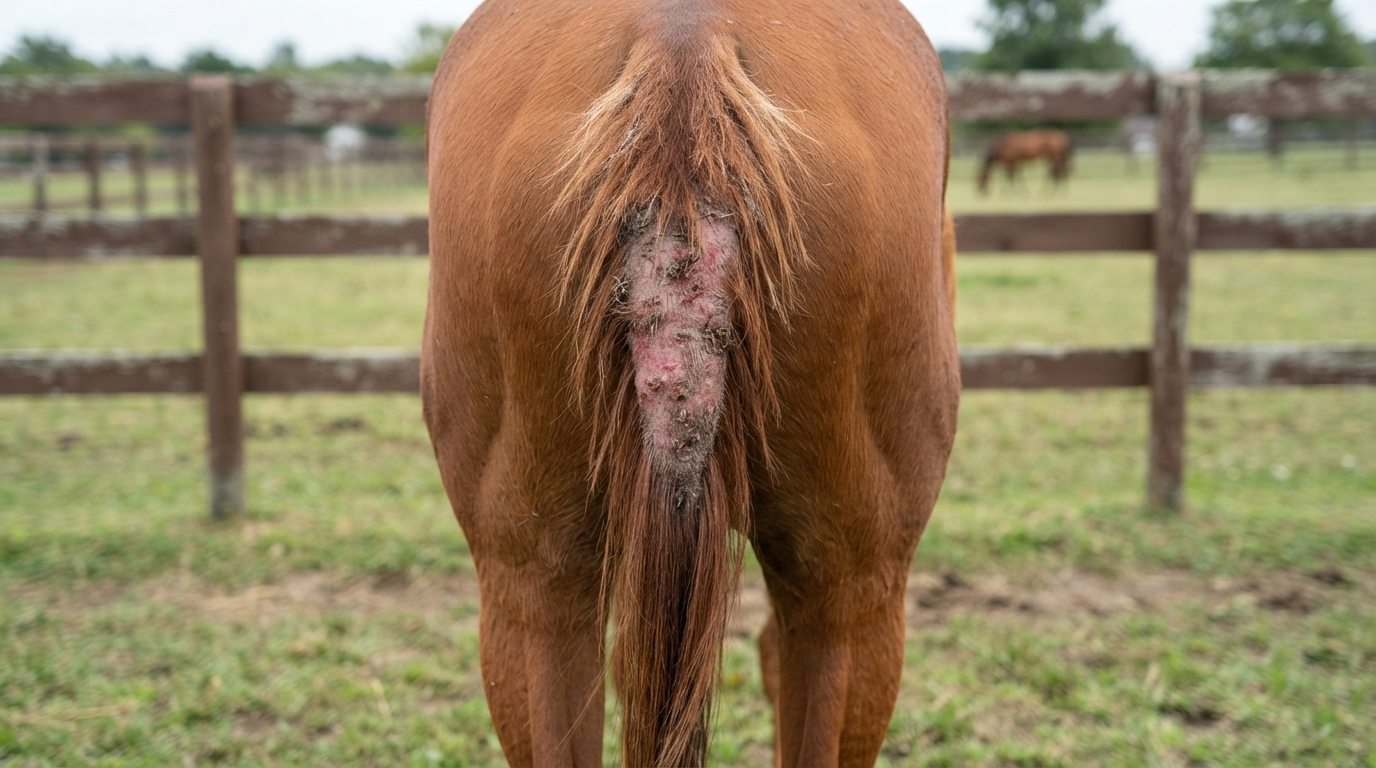
- Hair loss and broken, thinning patches from rubbing
- Small, raised bumps or crusty areas on the skin
- Thickened or irritated skin in horses with a longer history of Queensland itch
- Occasional involvement of the belly, face, or ears in more sensitive horses
Checking your horse over during a regular grooming routine is one of the easiest ways to catch early signs of rubbing or hair loss before they become bigger problems.
Queensland Itch Treatment: What to Expect
There's no single Queensland itch treatment that works for every horse, since severity and sensitivity vary so much from one horse to the next. Most plans combine a few approaches:
- Reducing midge exposure: a pour-on product like Shield is designed specifically to help control Queensland itch, alongside stabling during dawn and dusk when midges are most active.
- Soothing and protecting the skin: an antiseptic lotion such as Quititch Lotion can help calm irritated areas and support healing where rubbing has broken the skin.
- Moving away from water sources: relocating susceptible horses away from dams, creeks, and other still water during peak midge season.
- Vet input for severe cases: your vet may recommend additional options for horses with more significant reactions.
Starting your Queensland itch treatment routine early in the season, before symptoms take hold, generally yields the best results and reduces the need for later rubbing and skin damage.
Preventing Queensland Itch Before It Starts
A little prevention goes a long way with Queensland itch in horses. Since midges are most active at dawn and dusk, stabling your horse during these times reduces exposure with little extra effort.
Pairing this with regular use of a midge-specific repellent keeps protection consistent throughout the season, rather than only reaching for it once itching has already started.
A steady grooming and skin care routine, including coat supplements for horses, also helps you stay ahead of things. Using horse grooming supplies regularly lets you spot new rubbing early, while a gentle horse medicated shampoo can help keep the skin calm and clean if irritation does appear.
Stay Ahead of Queensland Itch with Scone Equine Group
Managing Queensland itch in horses is so much easier with the right products on hand before the season ramps up.
Browse equine vet supplies at Scone Equine Group and get your horse set up with everything needed for a more comfortable summer.