
Laminitis in Horses: Signs, Causes & Treatment
25th Aug 2026
Laminitis in horses is one of the most serious hoof conditions you can come across, and it's always treated as an emergency. It happens when the sensitive laminae inside the hoof become inflamed, and it can affect any horse or pony, not just overweight ones, as commonly assumed.
The good news is that recognising laminitis symptoms early and getting your vet involved quickly gives your horse the best chance of a full recovery. Here's what to look for, how laminitis treatment works, and how to lower the risk of laminitis in horses going forward.
Key Takeaways
- Laminitis in horses is a medical emergency that requires veterinary care as soon as symptoms appear.
- Common laminitis symptoms include heat in the hoof, a strong digital pulse, and a reluctance to move.
- Causes range from metabolic conditions and grain overload to obesity and overloading a healthy leg.
- Laminitis treatment usually combines vet-directed pain relief, cooling, dietary changes, and supportive farrier work.
- Ongoing hoof care and weight management are two of the most effective ways to reduce the risk.
What is Laminitis in Horses?
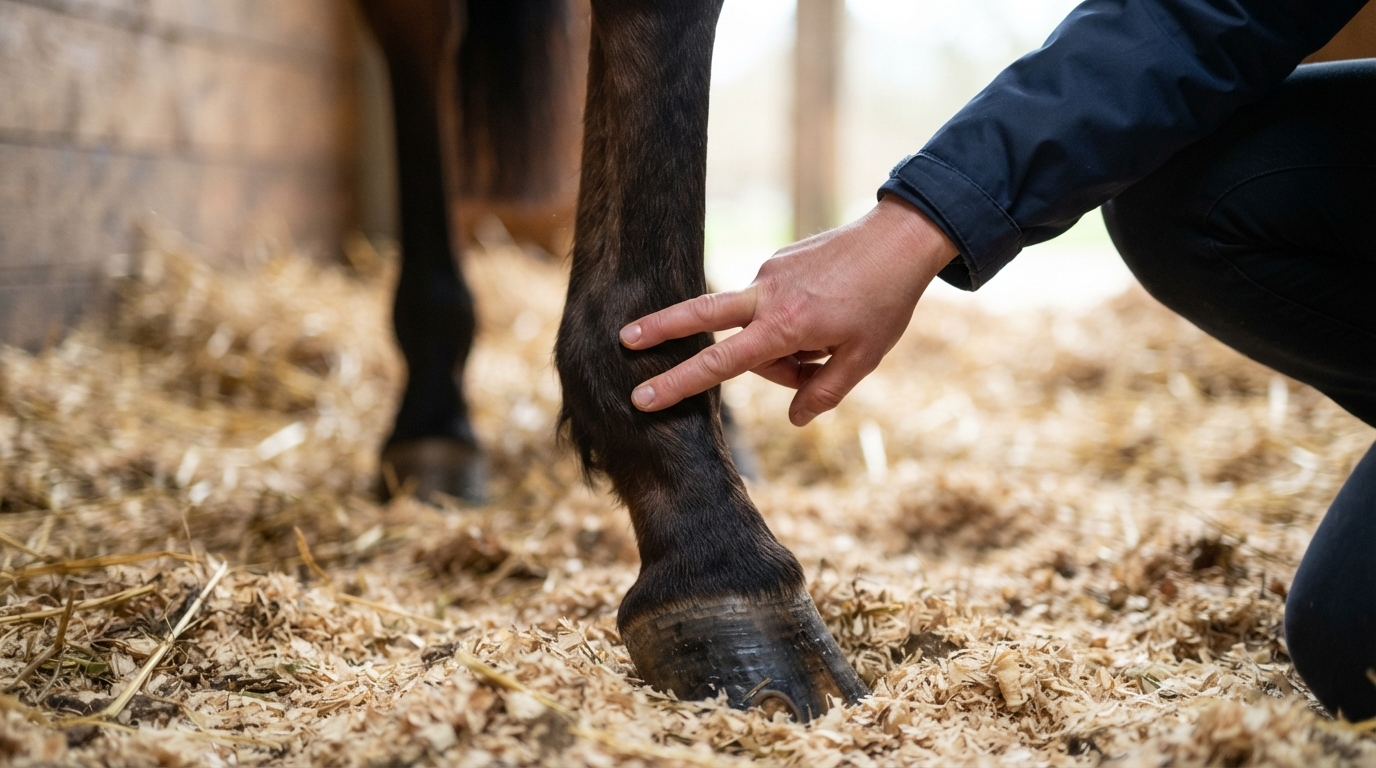
Laminitis is inflammation of the laminae, the soft tissue structures that connect the coffin bone inside the hoof to the hoof wall. Thousands of tiny interlocking laminae normally hold this bone securely in place.
When the laminae become inflamed, they weaken, and in serious cases, the coffin bone can rotate or sink within the hoof capsule. This is why laminitis in horses is treated so seriously by vets and farriers alike. Left unmanaged, it can cause lasting structural damage. Caught early, though, most horses go on to recover well with the right care and support.
What Causes Laminitis in Horses?
Several different triggers can lead to laminitis, including:
- Metabolic conditions such as Equine Metabolic Syndrome or PPID (Cushing's disease), which affect how a horse processes insulin
- Grain overload, or a sudden change to rich, sugary spring or autumn pasture
- Carrying excess weight, which puts extra strain on the hoof structures
- Overloading one leg while resting an injury on the opposite limb
- Severe illness, retained placenta, or other systemic stress that affects circulation to the hooves
Because the underlying cause shapes the treatment plan, your vet will usually want to understand your horse's diet, workload, and general health, alongside examining the hooves themselves. Identifying and managing that root cause is just as important as treating the hoof pain itself.
Laminitis Symptoms to Watch For
Acute laminitis symptoms tend to appear quickly and can include:
- Heat in the hoof or hooves
- A stronger-than-usual digital pulse at the fetlock
- Reluctance to move, or a short, shuffling gait
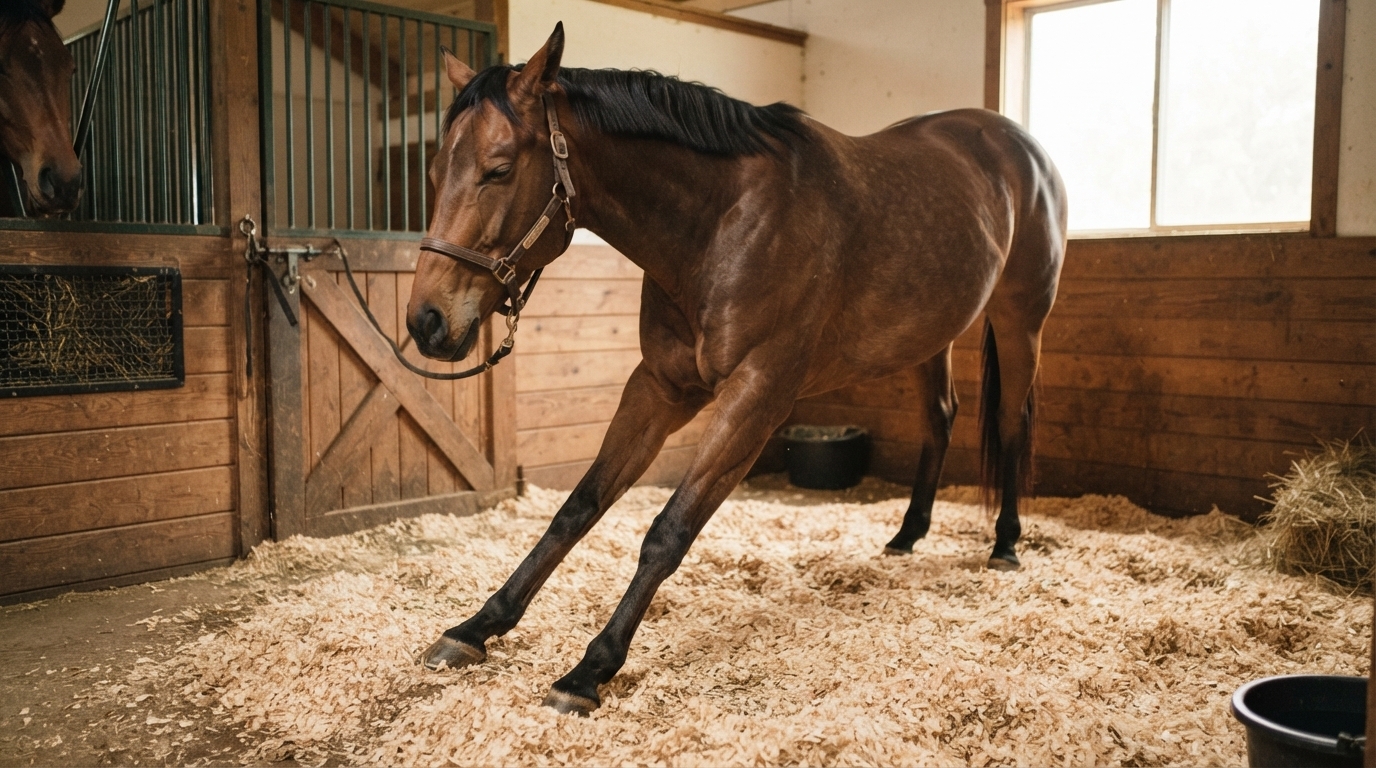
- Standing with weight rocked back onto the heels to take pressure off the front of the hoof
- Spending more time lying down than usual
Chronic laminitis, which develops after repeated or long-term episodes, often presents differently, with hoof wall rings, a dished hoof wall, or a flatter, more convex sole. These changes can build up gradually, which is exactly why keeping up with daily checks, covered in our guide to why is hoof care important for horses, makes it much easier to catch problems before they progress.
Laminitis Treatment: What to Expect
If you suspect laminitis, call your vet straight away rather than waiting to see if it settles on its own. Laminitis treatment typically involves:
- Pain relief and anti-inflammatory support prescribed by your vet
- Cooling the hooves in the acute phase, when advised
- Confining your horse to a soft, supportive surface such as deep shavings or sand
- Adjusting the diet to remove excess sugar and starch
- Corrective trimming or therapeutic shoeing once your vet and farrier have assessed the hoof
Recovery timeframes vary depending on how quickly laminitis treatment began and how severe the episode was. Mild cases may settle within a couple of weeks, while more advanced cases can take months of careful management, so it's worth staying closely guided by your vet throughout.
Supporting Recovery and Ongoing Comfort
While your horse is resting and recovering, a well-considered hoof supplement for laminitis can be a useful part of the bigger picture, alongside your vet's treatment plan and dietary changes.
Horses recovering from laminitis often shift more weight onto other limbs to stay comfortable, which can cause joints to work harder than usual. Adding a 4cyte joint supplement alongside your recovery plan can help support overall comfort and mobility during this time.
Stocking your first aid cupboard with the right hoof care supplies means you're ready to support your horse's hooves through recovery and beyond, without scrambling to find what you need in the middle of a flare-up.
Reducing the Risk of Laminitis in Horses
Once a horse has had one episode of laminitis, they're more prone to future flare-ups, so prevention becomes part of everyday management:
- Keep an eye on body condition and adjust feed accordingly, particularly for good doers and ponies
- Restrict access to lush pasture, especially in spring and autumn when sugar content spikes
- Maintain a consistent trimming or shoeing schedule with your farrier
- Manage any underlying metabolic conditions with your vet's guidance
- Watch for early warning signs so you can act quickly if something changes
Get the Right Support for Your Horse's Hooves
Whether you're managing a laminitis recovery or simply staying ahead of hoof problems, having trusted products on hand makes all the difference. Visit horse veterinary supplies at Scone Equine Group and find everything you need to support your horse's hooves.