
Ice Boots for Horses: When Cold Therapy Helps and How to Use It After Work
10th Jul 2026
If your horse works hard, whether that's competing, jumping, or putting in solid training sessions, ice boots for horses are worth having in your kit. Cold therapy is one of the simplest recovery tools available, and used correctly, it can make a real difference to how your horse feels the day after a big effort.
Here's what the science says, when it's genuinely useful, and how to apply it properly.
Key Takeaways
- Ice boots reduce heat, swelling and inflammation in the lower legs after exercise or injury
- Cold therapy works by slowing cellular activity and constricting blood vessels in the treated area
- The most common applications are post-work recovery, soft tissue injuries and acute laminitis support
- Sessions typically run 10–20 minutes; don't exceed 30 minutes without veterinary guidance
- Ice boots support recovery, but they don't replace treatment for serious injuries or ongoing joint issues
- Always check with your vet if you're using cold therapy for a specific condition
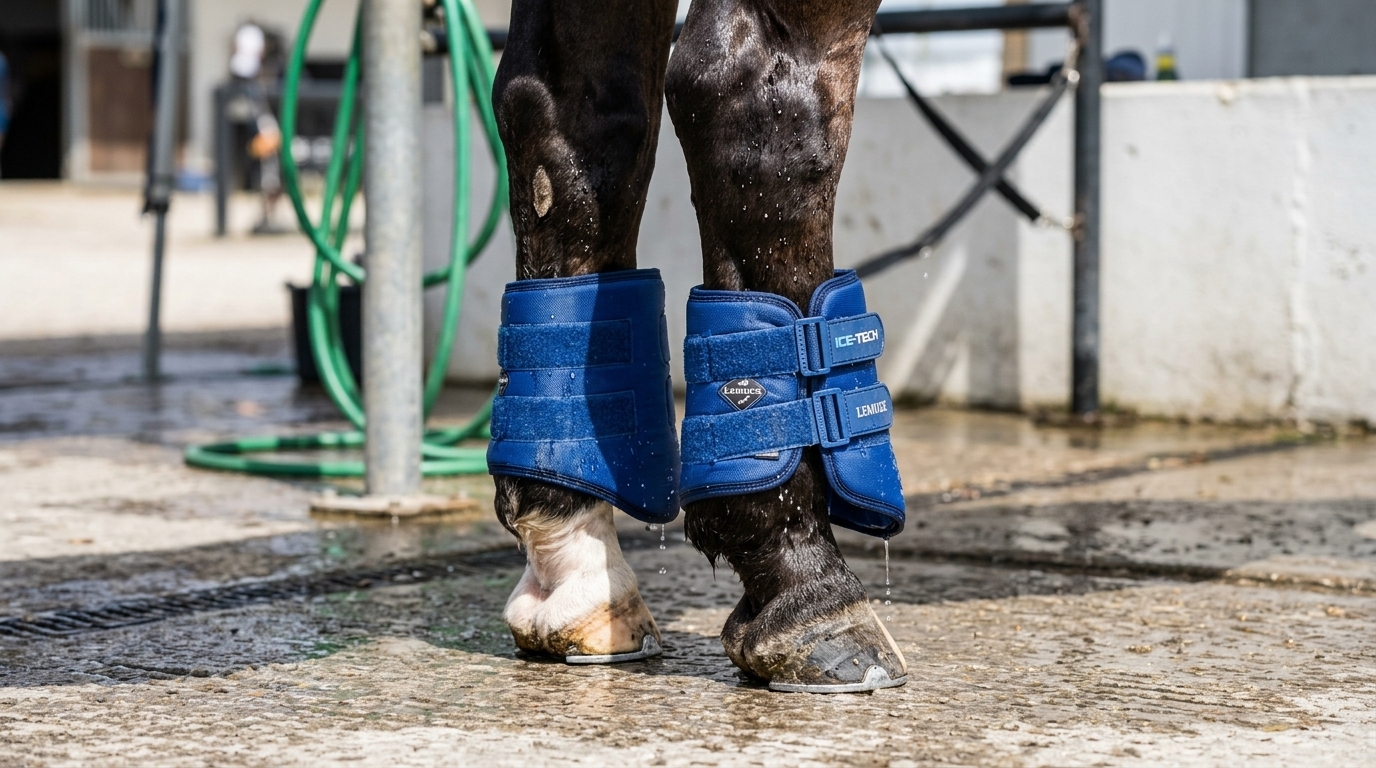
How Cold Therapy Actually Works
When a horse's leg heats up after work or injury, the surrounding tissue responds with inflammation. Increased blood flow, fluid build-up and cellular activity that can slow healing if left unchecked.
Cold therapy (or cryotherapy) works by lowering tissue temperature, which does three things:
- Constricts blood vessels – reducing fluid build-up and swelling
- Slows cellular metabolism – giving damaged tissue a chance to stabilise
- Dulls nerve activity – reducing pain and discomfort in the treated area
The result is less heat, less puffiness and a more comfortable horse. It's the same principle behind icing a sprained ankle – it just looks a bit different when you're working with 16 hands of horse.
When Ice Boots for Horses Are Most Useful
After Hard Work or Competition
This is the most common use, and it's a good habit to build into your routine. Horses that jump, gallop, do fast work or compete regularly accumulate micro-trauma in the tendons and soft tissue of the lower leg. Applying ice boots for horses after a big session helps limit the inflammatory response before it takes hold.
Think of it as a preventative measure rather than waiting for a problem to show up.
Soft Tissue Injuries
Ice boots are a go-to for early management of tendon and ligament injuries. In the first 24–72 hours after a strain or knock, cold therapy is one of the most effective tools you have for managing acute inflammation. Your vet will likely recommend it as part of the initial treatment plan alongside rest.
Acute Laminitis
Cold water immersion and ice boots have strong research support for reducing the severity of acute laminitis episodes, particularly in horses at risk during periods of high sugar pasture growth or illness. Continuous cold therapy to the hooves and lower limbs can limit the damage caused by the inflammatory cascade that drives laminitis.
This is an area where your hoof care for horses routine and veterinary guidance really count – don't rely on ice boots alone.
Post-Travel Recovery
Long floats in warm weather add up. Many competition horse owners apply cold therapy to the legs after unloading as a standard part of their travel recovery routine.
Types of Ice Boots: Which to Choose
- Wet ice boots use a combination of water and ice. They tend to provide stronger, faster cooling and are a good option for acute situations. The downside is the mess and the need to have ice on hand.
- Dry ice boots use gel packs, beads or insulated fluid systems that you freeze in advance. They're cleaner and more convenient for regular post-work use, and most designs are reusable. These are the more practical option for everyday recovery.
- Wrap-style boots allow the horse to stand or move around during treatment, which some horses tolerate better. Sleeve-style boots are simpler to apply, but keep the horse more stationary during the session.
For most horse owners doing routine post-work recovery, a good pair of horse boots with reusable gel inserts is the most practical choice. Browse our range at Scone Equine Group to find options suited to your discipline and budget.
How to Use Ice Boots: A Simple Guide
Timing: Apply within 30 minutes of finishing work for best results.
Session length: 10–20 minutes is the standard recommendation. For acute injuries, you can repeat sessions every few hours in the first 24–72 hours. Don't leave boots on longer than 30 minutes without checking in with your vet.
What to check before applying:
- No open wounds or skin irritation in the area
- The boot fits snugly but isn't cutting off circulation
- The horse is standing comfortably with the boot on
What to watch for during treatment:
- Excessive shivering or distress – remove the boot
- Any signs of skin irritation or numbness after removal
What Ice Boots Don't Do
Cold therapy is a recovery and management tool. It's not a substitute for a proper treatment plan when something is genuinely wrong.
For horses with ongoing joint issues, recurring stiffness or age-related wear, targeted joint supplements for horses are worth discussing with your vet. Cold therapy after work and quality joint support aren't mutually exclusive, and most performance horse owners use both.
Similarly, if you're noticing consistent heat or puffiness in the legs after exercise, that's a signal to get a vet assessment rather than just reaching for the ice boots.
Keep Your Horse Well with Scone Equine Group
Used consistently and correctly, ice boots are a low-cost, low-effort addition to your horse's recovery routine that genuinely pays off – especially through summer competition season.
Explore our range of horse boots and related recovery products at Scone Equine Group, or get in touch if you'd like a recommendation for your horse's workload and discipline.