
Common Types of Hoof Cracks and How to Manage Them Between Farrier Visits
24th Feb 2026
If you’ve noticed a dark line running up the hoof wall that wasn't there last week. Is it serious? Should you call the farrier immediately, or can it wait?
Hoof cracks in horses are incredibly common, and the good news is that most of them are superficial and won't cause any real problems. However, knowing which types of hoof cracks need urgent attention and which ones you can monitor at home is an important skill for any horse owner.
A Quick Introduction
- Most hoof cracks (around 90%) are superficial and won't cause lameness
- Cracks are classified by location: toe, quarter, heel, or bar
- Superficial cracks can often be managed between farrier visits with good hoof care
- Deep cracks that bleed, cause pain, or show signs of infection need immediate professional attention
- Prevention through regular trimming and proper nutrition is always easier than treatment
Understanding the Different Types of Hoof Cracks
When it comes to equine types of hoof cracks, location matters. Where a crack appears on the hoof tells you a lot about what caused it and how serious it might be.
Toe Cracks
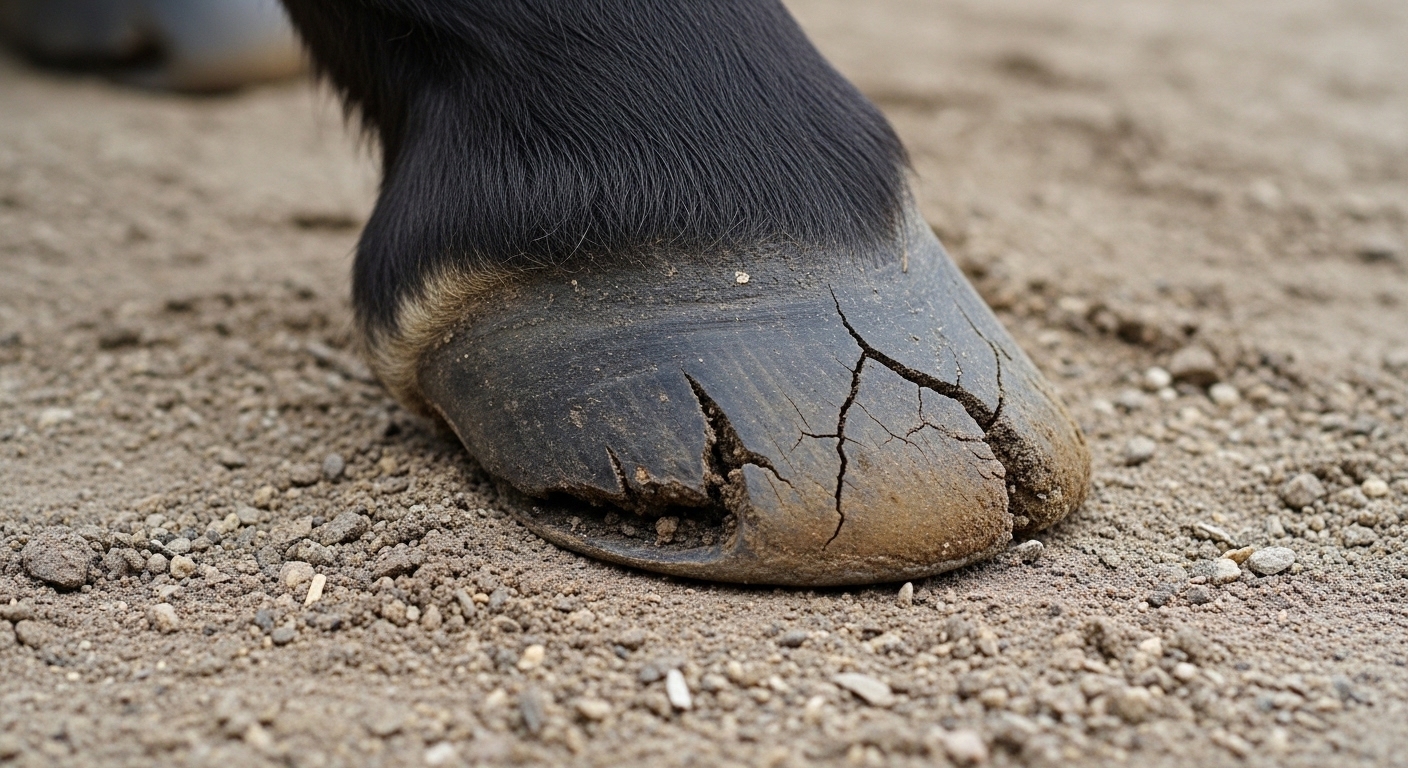
These appear at the front of the hoof and are among the most common types you'll encounter. Toe cracks often develop when the toe grows too long between trims, placing excessive pressure on the front of the hoof. Horses with heel pain may also develop toe cracks because they land toe-first to avoid discomfort, which concentrates force at the front of the foot.
Most toe cracks are partial thickness, meaning they don't extend all the way through the hoof wall. They're usually more cosmetic than concerning, though chronic toe cracks can indicate underlying balance issues that need addressing.
Quarter Cracks
Found on the sides of the hoof between the toe and heel, quarter cracks tend to cause more trouble than toe cracks. The hoof wall is thinner in this area and must flex as the horse bears weight, making cracks here more likely to deepen and cause pain.
Quarter cracks are often linked to conformation issues like toeing in or toeing out, which creates uneven pressure distribution across the hoof. They can also result from trauma, such as when a horse overreaches and strikes the coronary band of a front foot with a hind hoof.
If your horse develops a quarter crack that starts at the coronary band and grows downward, this is considered a "true" quarter crack and may require stabilisation to prevent lameness.
Heel Cracks
These develop at the back of the hoof and are frequently caused by ill-fitting shoes. When a shoe is too short and doesn't adequately support the heel, or when it's too long and creates leverage, cracks can form. Heel cracks can also result from sheared heels or conformational issues that cause uneven landing.
Horizontal Cracks
Unlike vertical cracks, horizontal cracks usually appear after an abscess has burst through the coronary band. Once you see a horizontal crack, the worst is typically over: the abscess has drained and the hoof just needs time to grow out. These cracks rarely cause ongoing problems as long as they're kept clean.
Grass Cracks vs Sand Cracks
You might hear these terms used to describe vertical cracks. Grass cracks start at the ground and travel upward, while sand cracks begin at the coronary band and grow downward. Sand cracks are generally considered more serious because damage to the coronary band can affect how the hoof grows.
Understanding seedy toe is also important here, as white line disease can weaken the hoof wall and contribute to cracking.
What Causes Hoof Cracks on Horses?
Several factors can contribute to hoof cracks in horses:
- Hoof imbalance or irregular trimming schedules
- Conformation issues that create uneven weight distribution
- Environmental extremes (very wet or very dry conditions)
- Trauma to the coronary band
- Poor hoof quality due to genetics or nutritional deficiencies
- Ill-fitting or incorrectly placed shoes
Proper hoof maintenance can help you prevent many of these issues before cracks develop. Learn more about the importance of hoof maintenance here.
Managing Minor Cracks Between Farrier Visits
Not every crack requires an emergency call. Here's how to assess and manage minor cracks at home.
Assess the Severity
Look closely at the crack. Is it superficial (only affecting the outer layers) or does it appear to go deep into the hoof wall? Press gently around the crack and at the coronary band above it. If your horse shows pain, the crack may involve sensitive tissue.
Superficial cracks that don't cause pain and don't bleed can usually wait until your next scheduled farrier visit, though it's worth sending photos to your farrier for their opinion.
Keep It Clean and Dry
Dirt and debris packed into a crack can introduce bacteria and lead to infection. Pick your horse's feet daily and use a stiff brush to clean around any cracks. If conditions are wet, try to provide access to dry footing for at least part of the day.
Consider Topical Support
Horse hoof repair products like hoof sealers can help prevent superficial cracks from worsening by keeping out moisture and debris. These products create a protective barrier over the crack while it grows out. However, avoid using them on deep or infected cracks, as sealing in bacteria can make things worse.
Support Hoof Health From the Inside
Strong hooves start with good nutrition. A quality hoof supplement for horses containing biotin, methionine, zinc, and other hoof-supporting nutrients can improve overall hoof quality over time. Keep in mind that it takes around nine to twelve months for a hoof to grow out completely, so nutritional changes won't produce overnight results.
Monitor for Changes
Take photos of any cracks you're watching so you can track whether they're growing, staying stable, or improving. Note any changes in your horse's movement or willingness to work.
When to Call Your Farrier or Vet
Contact your farrier promptly if you notice:
- Bleeding from the crack
- Signs of infection (discharge, heat, swelling, foul smell)
- Lameness or obvious pain when the area is touched
- A crack that's widening or deepening rapidly
- Any crack that starts at the coronary band
Your farrier has specialised farrier equipment to stabilise serious cracks, including techniques like patching, wiring, or applying clips to prevent further movement. In some cases, your vet may also need to be involved to take radiographs or treat underlying infections.
Prevention is Always Easier than Treating Hoof Crack on Horses
The best approach to hoof cracks in horses is to prevent them in the first place:
- Stick to a regular trimming schedule (typically every six to eight weeks)
- Ensure proper hoof balance at each trim
- Provide a consistent footing and avoid extremes of wet and dry
- Feed a balanced diet that supports hoof health
- Address any lameness or gait abnormalities early
- Use hoof moisturisers in dry conditions and keep hooves from staying constantly wet
By staying vigilant and maintaining good hoof care habits, you can catch small cracks early and prevent them from becoming bigger problems.