
Horse Wound Care: How to Clean & Dress a Wound
25th Aug 2026
Horses seem to always find new ways to nick, scrape, or cut themselves, often at the most inconvenient times. Good wound care for horses doesn't need to be complicated, though, and knowing the basics means you can respond calmly and confidently the moment you spot one.
Most everyday cuts and grazes heal beautifully with simple, consistent care at home. Knowing how to clean a horse wound properly, and when a vet visit is the better call, makes all the difference in how smoothly things heal.
At Scone Equine Group, we help owners feel prepared for exactly this kind of moment. Here's a clear, step-by-step guide to cleaning and dressing a wound the right way.
Key Takeaways
- Wound care for horses starts with a calm assessment: how deep is it, is it bleeding heavily, and is it near a joint or tendon?
- Clean gently with cool water or a mild antiseptic, and steer clear of cotton wool, which can leave fibres in the wound.
- Horse wound dressing should be applied to a clean, dry wound with a sterile, non-stick pad before bandaging.
- Deep, gaping, or heavily contaminated wounds, and anything near a joint, are always worth a vet call.
- Checking your horse's tetanus vaccination status is a simple step that's easy to overlook.
What is Involved in Wound Care for Horses?
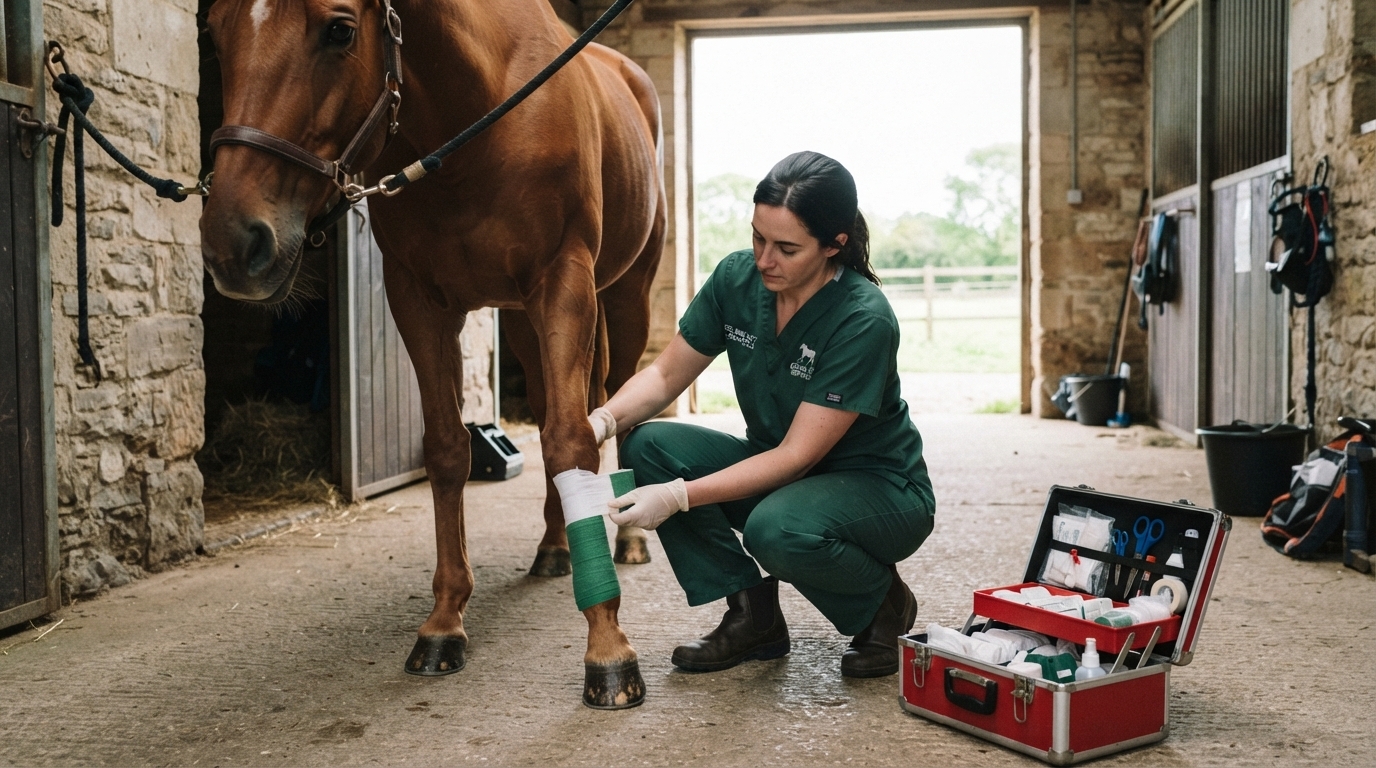
Wound care for horses covers everything from a small scrape after a paddock mishap to a deeper cut that needs your vet's attention. The steps are largely the same regardless of size: assess, clean, protect, and keep a close eye on the healing process.
Most horses will pick up a cut or graze at some point, often from fencing, gates, or a bit of overenthusiastic play with a paddock mate. Being ready with the right knowledge and supplies means you're never caught off guard.
Assessing the Wound First
Before you start cleaning, take a moment to properly look over the wound. This tells you whether you're dealing with something you can manage at home or something your vet should see first.
Ask yourself:
- Is it bleeding heavily, or has it mostly stopped?
- Is the wound shallow, or does it look deep?
- Is it anywhere near a joint, tendon, or the eye?
- Is there anything embedded in it, like a splinter or nail?
- When did your horse last have a tetanus vaccination?
If there's an embedded object such as a nail, leave it in place and call your vet rather than removing it yourself, since it can help them assess how deep the damage goes.
How to Clean a Horse Wound
Once you've had a good look and decided the wound is one you can manage at home, cleaning comes next.
1. Control the Bleeding
Apply gentle, steady pressure with a clean, non-fluffy pad until bleeding slows. Most minor wounds settle within about ten minutes.
2. Rinse Away Dirt and Debris
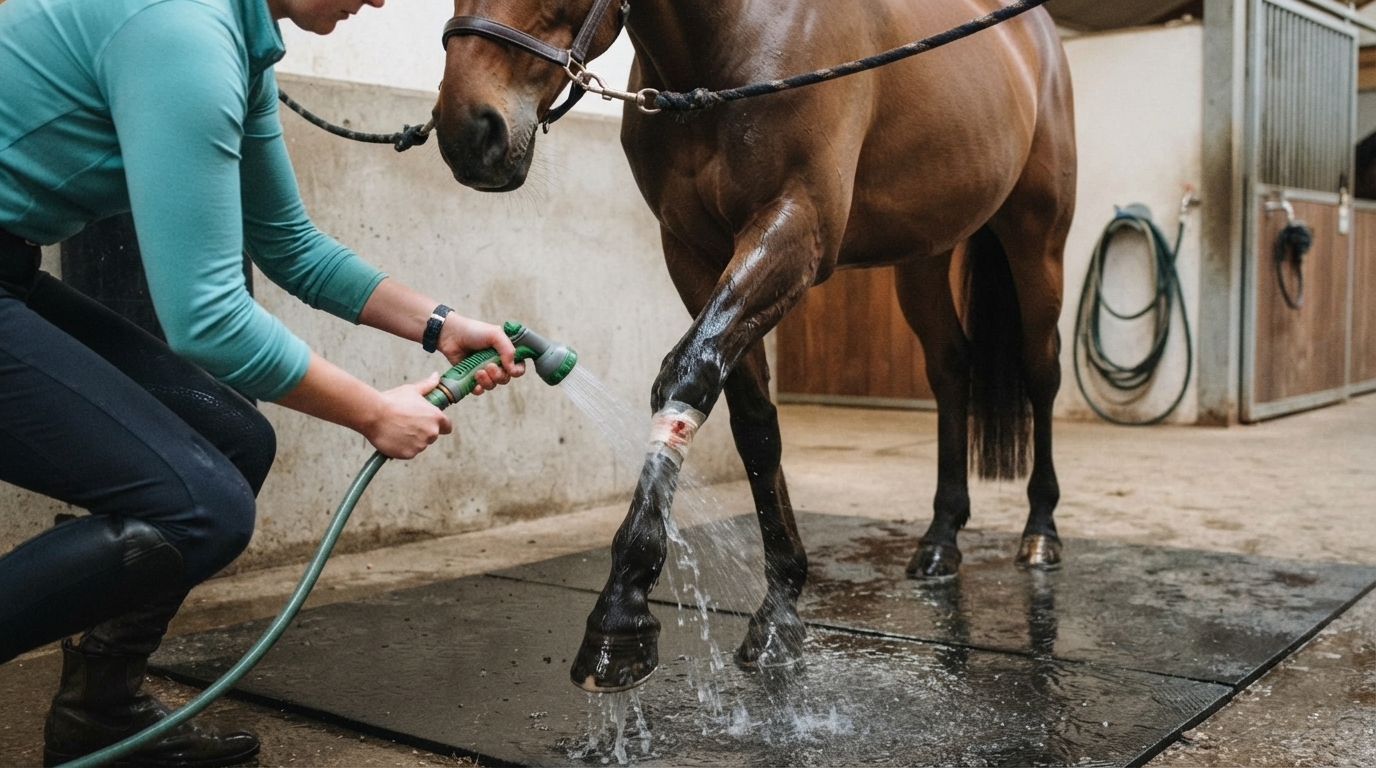
Cool, clean water or saline works well to flush out dirt, and a hose on a gentle setting is often the easiest option for legs and larger areas.
3. Clip the Surrounding Hair
If your horse is settled enough, carefully clipping hair around the wound helps you see what you're working with and keeps hair out of the healing tissue. Covering the wound while clipping stops loose hair from getting in.
4. Apply a Mild Antiseptic
A gentle antiseptic wash, such as a diluted chlorhexidine product like Cetrigen Spray, helps clean the area without irritating healthy tissue. Steer clear of strong disinfectants, which can slow healing.
5. Avoid Cotton Wool
Cotton fibres cling to raw tissue and are surprisingly hard to remove. A non-stick gauze pad does the job far better.
Horse Wound Dressing: The Next Step
With the wound clean, horse wound dressing is all about protecting the area while it heals.
- Make sure the wound is completely dry before covering it, since trapped moisture creates the perfect environment for bacteria.
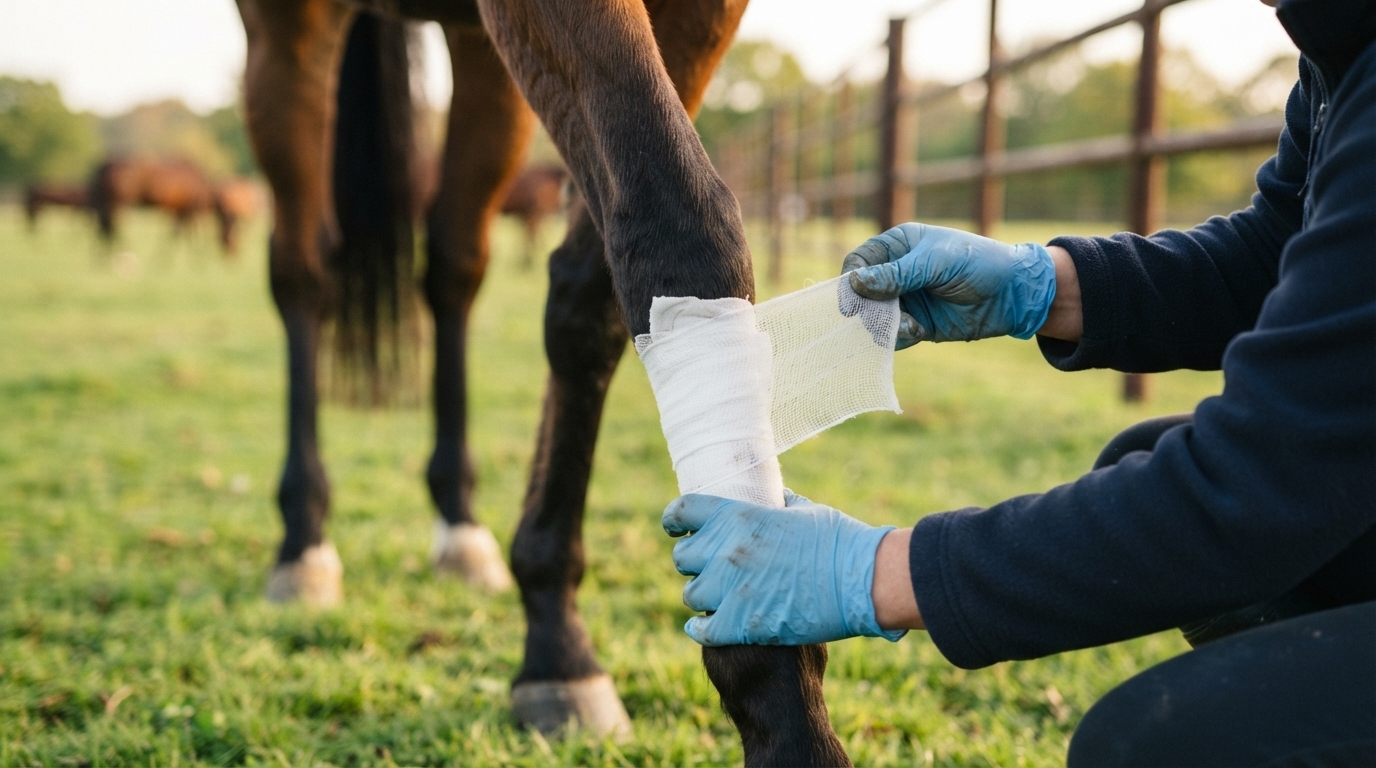
- Apply a sterile, non-stick dressing directly over the wound.
- A light spray of cetrigen spray under the dressing can offer extra antimicrobial support as it heals.
- Secure everything with horse bandage wraps, snug enough to stay in place but never tight enough to restrict circulation.
- Change the dressing daily, or as your vet recommends, checking for swelling, heat, or discharge each time.
When to Call Your Vet
Plenty of everyday nicks and grazes are perfectly manageable at home, and it's always worth calling your vet if:
- The wound is deep, gaping, or won't stop bleeding
- It's located near a joint, tendon, or the eye
- There's an object embedded in the wound
- Your horse is lame or clearly uncomfortable
- Your horse's tetanus vaccination isn't current
Your vet would always rather hear from you and talk it through than have you guess, so a quick call is never wasted time.
Everyday Wound Care Essentials
A well-stocked first aid kit makes wound care for horses so much less stressful when something happens. Handy items include:
- A reliable horse wound spray for quick, easy application between dressing changes
- Horse bandage wraps in a few different widths for legs and body wounds
- Horse first aid products covering the basics, from saline to non-stick pads
Get Horse Veterinary Supplies
Being ready for the unexpected takes the stress out of those moments when your horse manages to find trouble. Keeping your first aid kit stocked means you can start proper wound care for horses the second you need to.
Get horse veterinary supplies at Scone Equine Group and have everything on hand for a smooth, comfortable recovery.