
Horse Poultice Guide: How to Poultice a Hoof and Leg
25th Aug 2026
A horse poultice is one of the simplest, most useful tools in equine first aid. Reach for one when your horse picks up a hoof abscess, a stone bruise, or a swollen leg, and it gets to work drawing out infection, softening tissue, and easing inflammation while the area heals.
Knowing how to poultice a hoof is a skill worth having, and it's easier than it looks once you know the steps. The same basic horse poultice technique applies whether you're treating an abscess in the sole or reaching for a horse leg poultice after a knock or strain.
At Scone Equine Group, our vets see poulticing come up regularly, from abscesses the week before a show to a puffy leg after a yard mishap. Here's how to do it properly, for both hooves and legs.
Key Takeaways
- A horse poultice draws out infection, softens tissue, and eases swelling in hooves and legs alike.
- Wet poultices suit active infections that need drainage; dry poultices protect and support once the infection has settled.
- Hoof poultices usually need a boot or firm bandage to stay put; a horse leg poultice needs snug, even wrapping instead.
- Most poultices are changed every 12 to 24 hours, and wet poultices shouldn't stay on for more than two to three days.
- Ongoing lameness, spreading swelling, or heat that won't settle are worth a call to your vet.
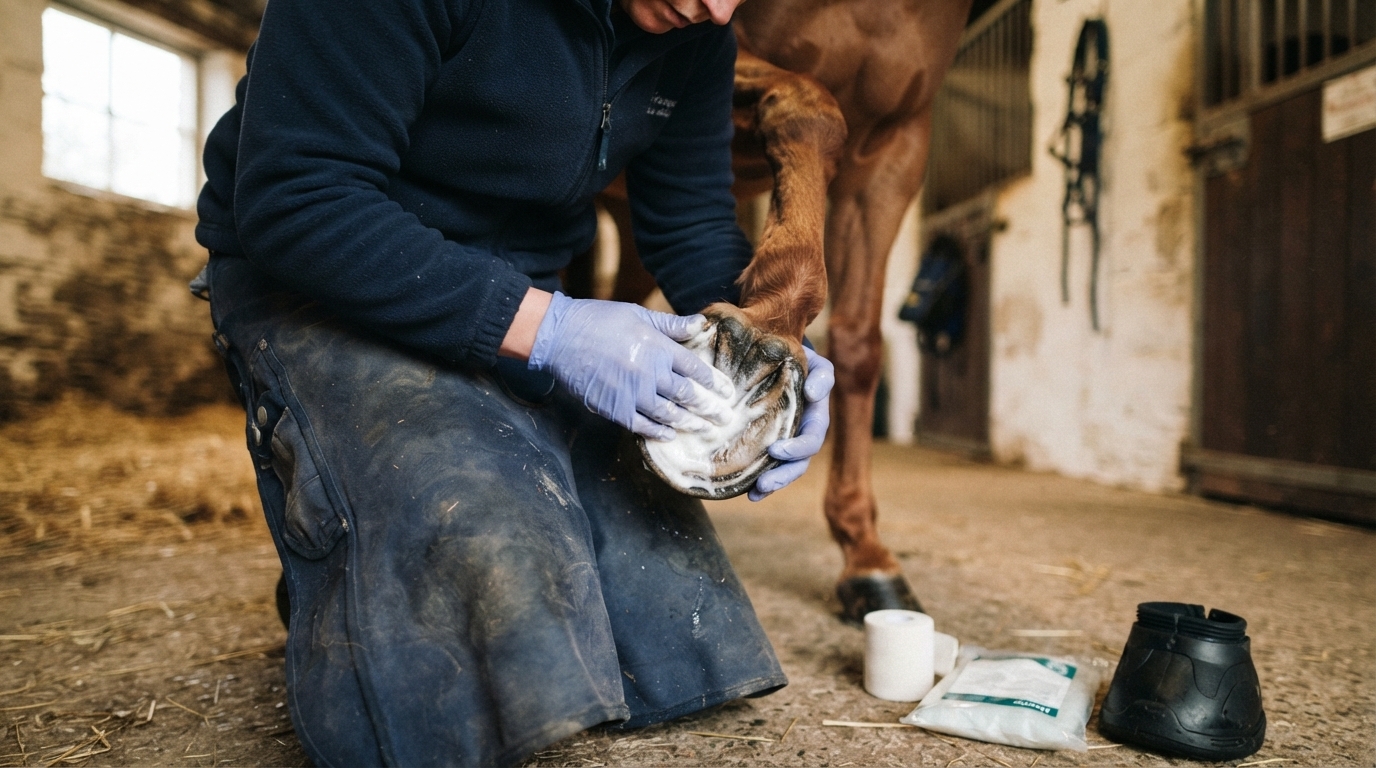
What Is a Horse Poultice, and When Do You Need One?
A horse poultice is a soft, moist (or sometimes dry) dressing applied directly to the skin or hoof. It's used to soften tissue, encourage drainage, and calm swelling and discomfort.
Poulticing is most commonly used for hoof abscesses, sole bruises, and general swelling after a knock or strain. It's also handy for wounds that need a moist environment to heal well. Keeping a few hoof care products on hand means you're ready to go the moment you spot heat or sensitivity in a hoof.
How to Poultice a Hoof, Step by Step
1. Clean and Dry the Hoof
Pick out the hoof thoroughly, then wash and dry it well. Any dirt or moisture left behind can prevent the poultice from working properly.
2. Prepare the Poultice
For a wet poultice, soak the dressing in warm (not hot) water and wring out the excess. For a dry poultice, no soaking is needed. Cut it to size so it covers the whole sole.
3. Apply and Pad
Place the poultice against the sole, then add a layer of padding, such as cotton wool or Gamgee, over the top for cushioning and support.
4. Secure It
Wrap firmly with a bandage, or slip on a purpose-made poultice boot for a quicker, mess-free option. If your horse has a hoof crack or defect alongside the abscess, our hoof repair range can help once the poultice has done its work.
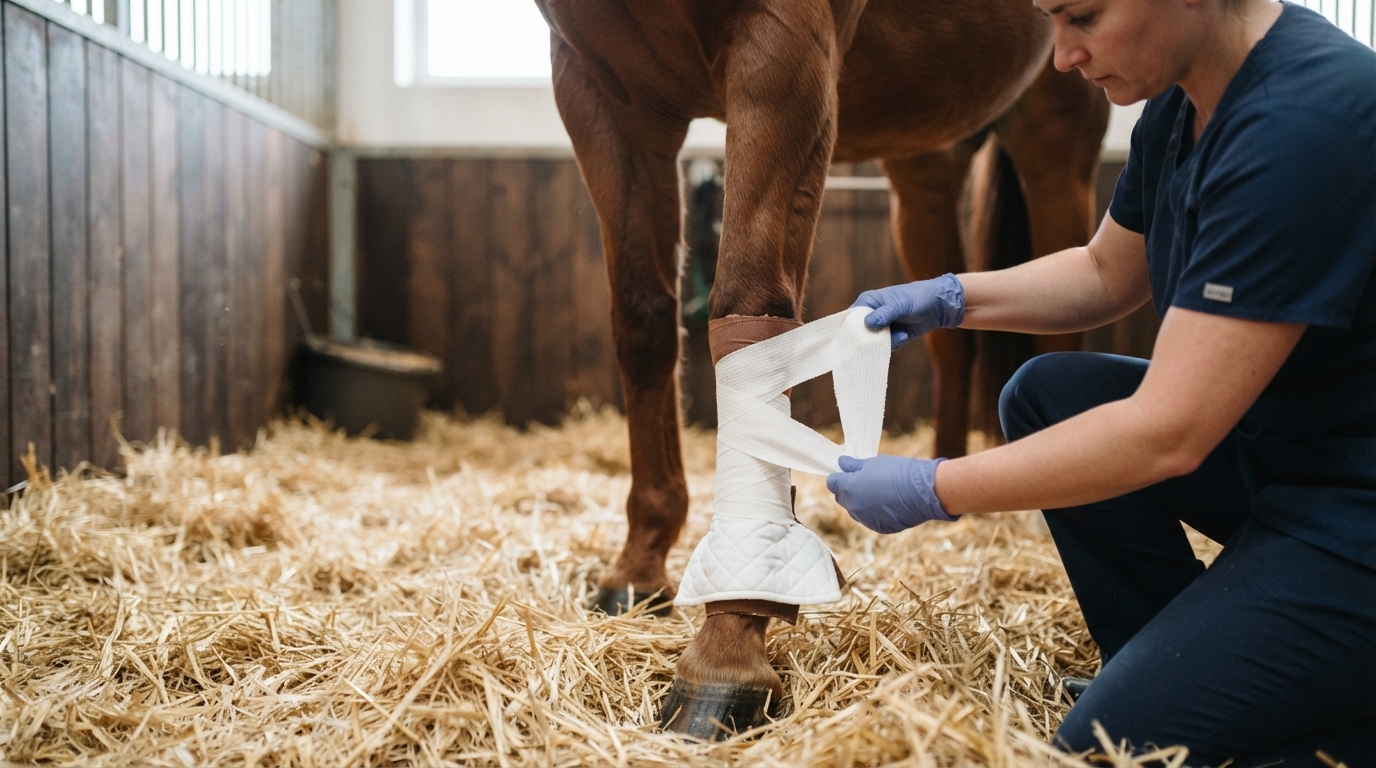
How to Apply a Horse Leg Poultice
A horse leg poultice follows the same principles as a hoof poultice, with a few tweaks for the shape of the limb.
- Clean and dry the area thoroughly, clipping the hair short if it's helping dirt cling on.
- Apply the poultice material directly over the swelling or wound.
- Add even padding right around the leg, rather than just on one side.
- Wrap from the bottom up in a figure-eight pattern, snug but never tight enough to restrict circulation.
If there's an open wound under the poultice, a wound spray for horses underneath can help keep things clean between changes. And a good set of horse bandages for wounds makes securing either a hoof or leg poultice a lot easier.
Wet or Dry? A Quick Guide
- Wet poultice: Best for active infection or an abscess that needs to drain. Change every 12 to 24 hours, and avoid using for more than two to three days in a row.
- Dry poultice: Best once drainage has slowed, to protect the area and keep it clean while things firm back up.
When to Call Your Vet
Poulticing is brilliant for supporting recovery at home, and it's worth looping your vet in if:
- Lameness hasn't started improving after two to three days
- Swelling is spreading up the leg
- The hoof or leg stays hot despite regular poulticing
- Your horse seems increasingly uncomfortable
Your vet can check there's nothing more serious going on and guide you on how long to keep poulticing.
Stock Up on Horse Poultice and Wound Care Essentials
A well-stocked kit makes all the difference when your horse needs a poultice in a hurry.
Shop horse vet supplies at Scone Equine Group and keep everything you need for hoof and leg care within easy reach.