
Hoof Abscess in Horses: How to Treat & Poultice
25th Aug 2026
A hoof abscess is one of the most common reasons horses suddenly turn up lame, and it can look alarming when it happens.
The good news is that a horse hoof abscess treatment plan is usually straightforward, and a well-applied hoof abscess poultice often has your horse feeling noticeably better within a day or two of the pressure being released.
If your horse has gone from sound to hopping lame almost overnight, a hoof abscess is often the first thing worth ruling out. Here's how to spot the symptoms, what treatment usually involves, and how to poultice a hoof abscess at home once your vet or farrier has given the green light.
Key Takeaways
- Hoof abscess symptoms often appear suddenly, with sharp lameness and heat in the hoof.
- Bacteria usually enter through a crack, a weak white line, or a puncture wound.
- Drainage is the key to relief, followed by a hoof abscess poultice to draw out remaining infection.
- Most abscesses resolve within a week with proper drainage and aftercare.
- Good hoof hygiene and regular trimming reduce the risk of recurrent abscesses.
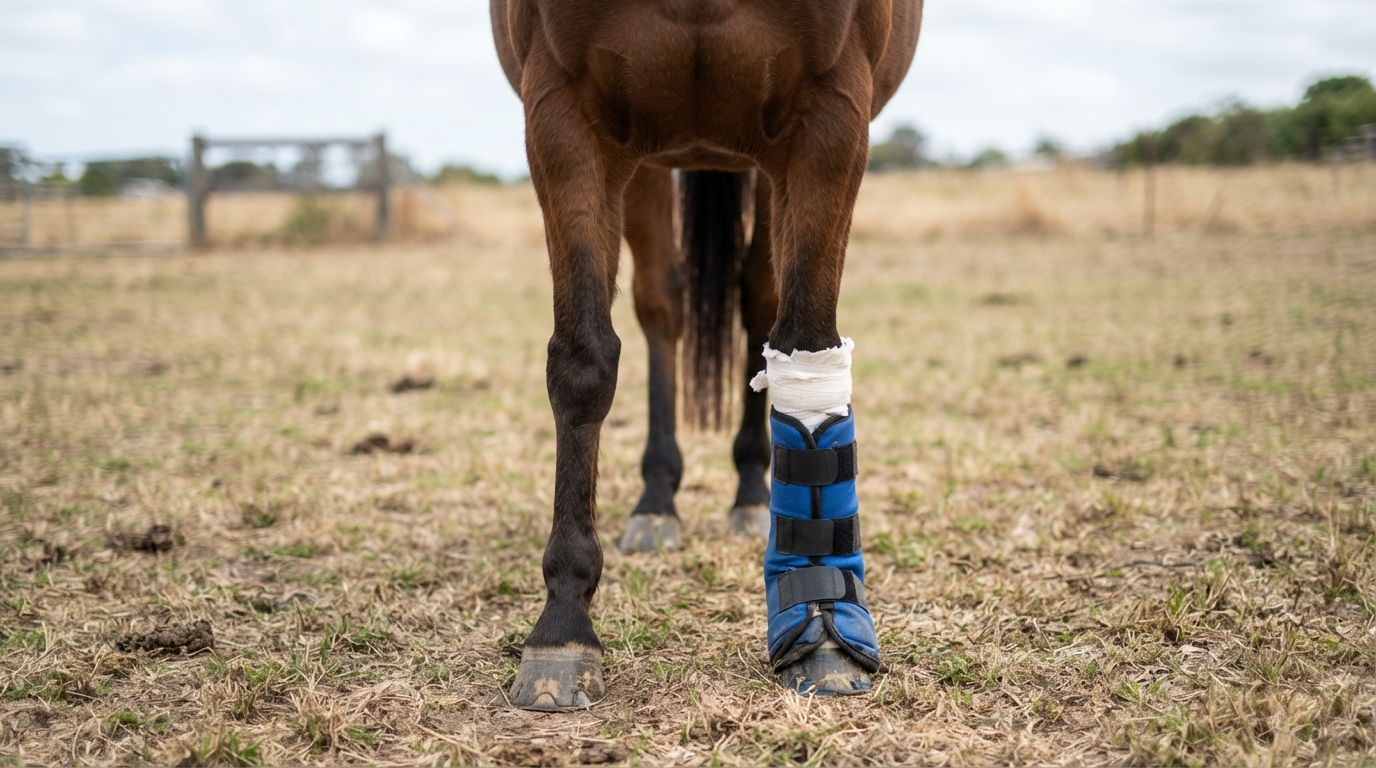
What is a Hoof Abscess?
A hoof abscess forms when bacteria get trapped inside the hoof capsule, usually through a small crack, a weak spot in the white line, or a puncture. The trapped infection builds pressure inside a space that can't expand, which is why even a small abscess can cause big pain.
Why It Feels So Painful
Horses' hooves are rigid structures, so there's nowhere for that pressure to go. Once the abscess drains, whether on its own or with help, most horses feel relief almost immediately.
Hoof Abscess Symptoms to Watch For
Hoof abscess symptoms can come on fast, sometimes within hours. Keep an eye out for:
- Sudden, often severe lameness, sometimes reluctance to put any weight on the foot
- Heat felt through the hoof wall
- A stronger or bounding digital pulse, felt near the fetlock
- Swelling around the coronary band, heel bulb or pastern
- Sensitivity when pressure is applied to the sole
If your horse shows several of these signs, it's worth booking a vet or farrier visit to confirm the cause and locate the abscess.
What Causes Hoof Abscesses?
A few common factors make abscesses more likely:
- Moving between wet and dry ground conditions, which causes the hoof to expand and contract
- A weak or stretched white line, sometimes from delayed trims
- Puncture wounds from stones, nails or debris
- Thin soles or a history of laminitis
- Poor quality or infrequent hoof care
Understanding what led to the abscess can help you and your farrier prevent the next one.
Horse Hoof Abscess Treatment: What to Expect
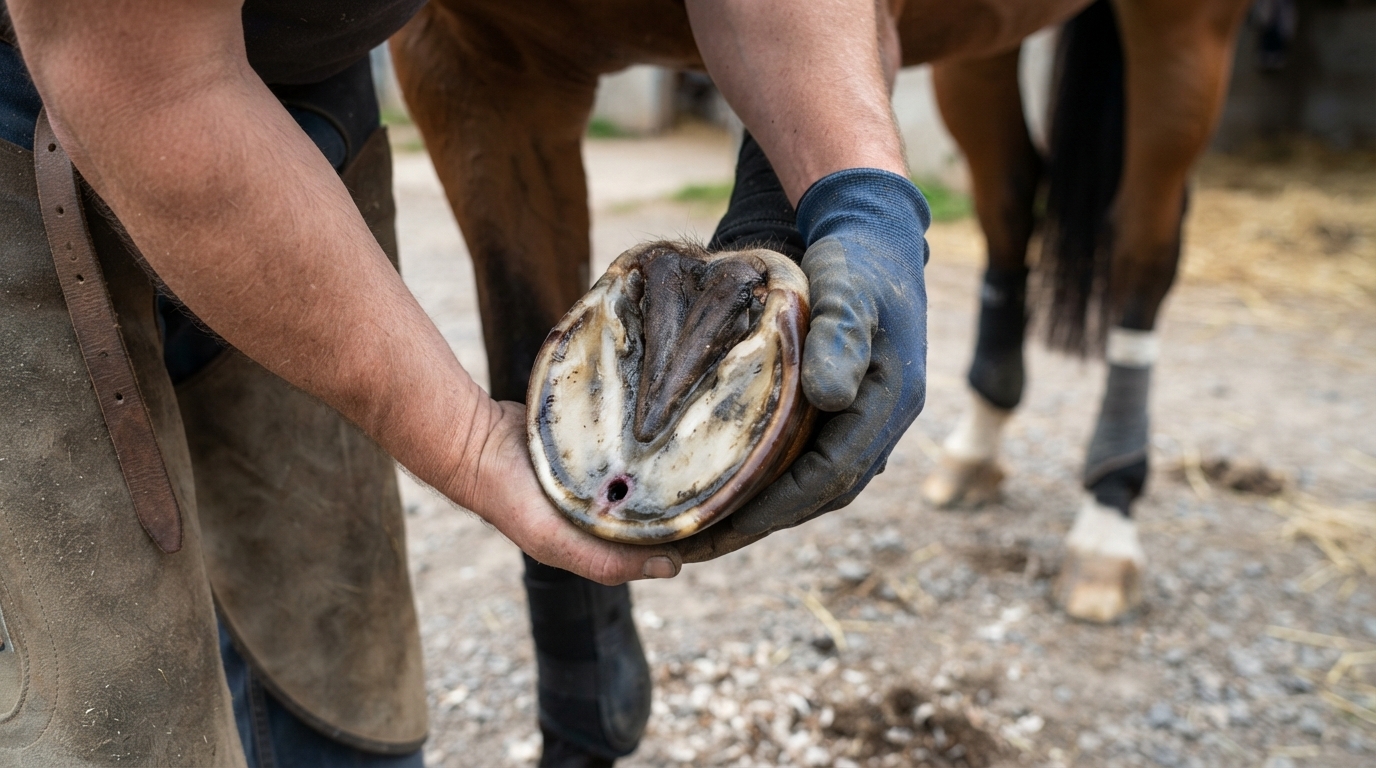
Your vet or farrier will usually start by using hoof testers to pinpoint the sore spot, then carefully pare away a small area of sole to locate and release the abscess. Finding drainage is the single biggest factor in getting your horse comfortable again, and it's the foundation of any effective horse hoof abscess treatment plan.
Sometimes the abscess sits too deep to reach straight away. In these cases, soaking the hoof helps soften the sole and bring the infection to a head so it can drain, either through the sole or at the coronary band.
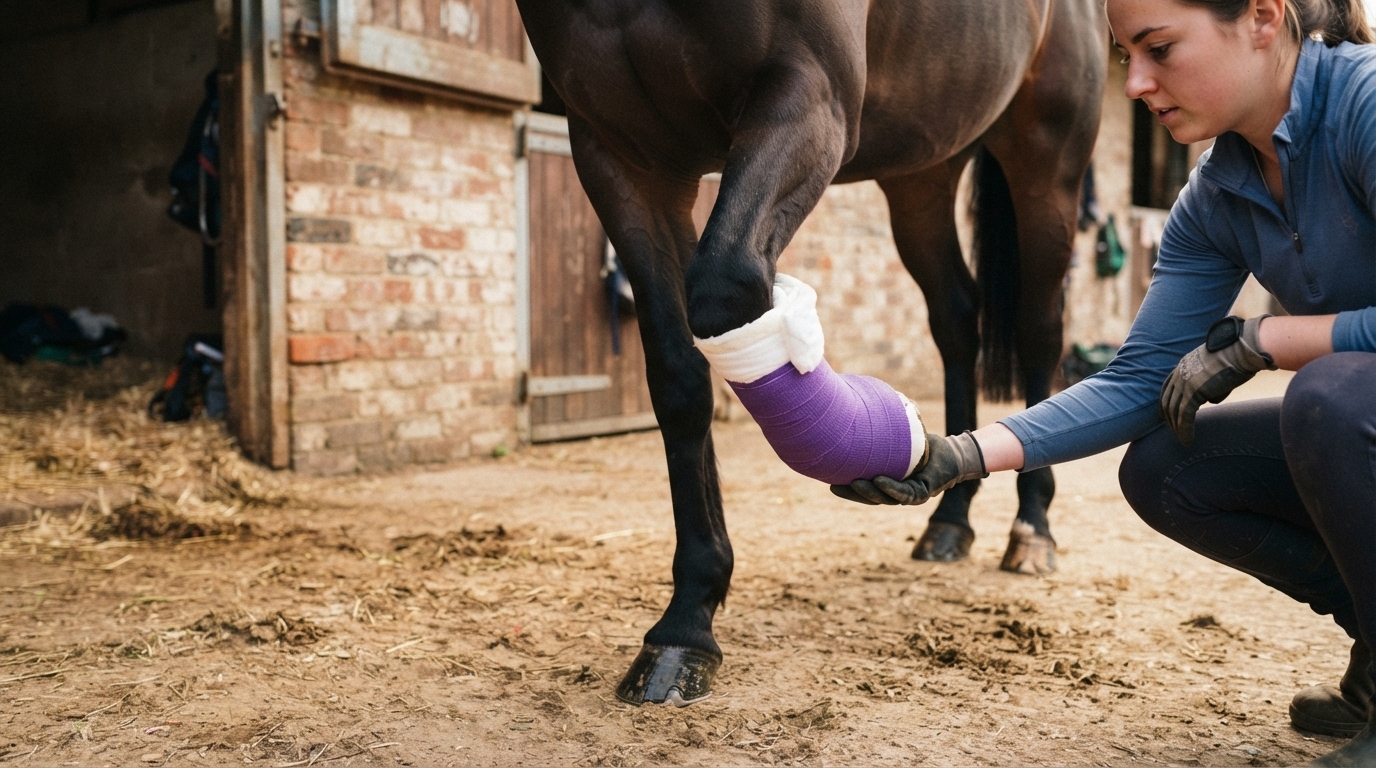
How to Apply a Hoof Abscess Poultice
Once drainage has been established, poulticing helps draw out any remaining infection and keeps the area clean while it heals. A hoof abscess poultice is one of the simplest and most effective tools you'll use during recovery, and most horse owners find it easy to manage at home once shown the basics.
Plan on poulticing for two to four days, or as long as your vet or farrier recommends, until drainage slows and the area starts to dry out.
What You'll Need
- A poultice pad or dressing (Animalintex is a common choice)
- Warm water
- Vet wrap or bandage
- A hoof boot or duct tape to keep everything secure
Step-by-Step
- Soak the poultice pad in warm water until damp, not dripping
- Apply it directly over the drainage site on the sole
- Wrap firmly with vet wrap, then secure with a hoof boot or bandage
- Change the poultice once or twice daily, checking that the hole stays open and draining
- Keep your horse in a clean, dry area while the poultice is on
When to Call the Vet Again
- Drainage continues or worsens after 48 hours
- Your horse is still very sore after one to two days
- Swelling spreads up the leg
- Your horse goes off its feed or seems unwell
Preventing Future Hoof Abscesses
Consistent hoof care for horses goes a long way toward reducing the risk of another abscess. Regular trims keep the white line strong and reduce the small cracks bacteria use to get in.
Supporting hoof quality from the inside helps too. A daily equine hoof supplement can strengthen hoof structure over time, which is especially useful for horses prone to thin soles or recurring abscesses.
If your horse has an open wound near the coronary band once the abscess drains, a gentle horse wound cream supports healing and helps keep the area clean. For hooves with weak spots or old abscess tracts that need stabilising, equine hoof repair products can help protect the area as new hoof grows through, so you're less likely to be reaching for another hoof abscess poultice down the track.
Stay Prepared with Scone Equine Group
Hoof abscesses are common, and having the right supplies on hand makes treatment much easier when one arises.
Browse horse vet supplies at Scone Equine Group and keep your first aid kit stocked with everything you need for a smooth, comfortable recovery.