
Gastric Ulcers in Horses (EGUS): Signs, Triggers and How to Support the Gut
10th Jul 2026
Gastric ulcers in horses are far more common than most people realise – research suggests they affect up to 90% of racehorses and around 60% of performance horses at some point.
But here's the thing: even your laid-back paddock horse isn't immune. Equine Gastric Ulcer Syndrome (EGUS) often flies under the radar for months, quietly affecting your horse's comfort, condition and behaviour before anything obvious shows up.
Key Takeaways
- EGUS affects horses of all ages and disciplines
- There are two distinct types, each with their own kinds of treatment
- Early signs can be easy to miss – a grumpy attitude or dull coat might be your first sign
- Good feeding habits and management are the backbone of prevention
- Only a vet can confirm ulcers with a gastroscopy
What Exactly is EGUS?
EGUS stands for Equine Gastric Ulcer Syndrome, an umbrella term for ulceration inside a horse's stomach. To understand why it happens, it helps to think about how horses are supposed to eat.
Horses are natural grazers. They're built to munch away for most of the day, constantly producing saliva as they chew. That saliva does an important job – it buffers the acid their stomach produces around the clock.
The issue is that modern management often pulls horses away from that natural pattern. Restricted turnout, high-grain diets, long gaps between feeds, heavy training schedules – all of these can tip the balance. When acid isn't being buffered properly, the stomach lining starts to suffer.
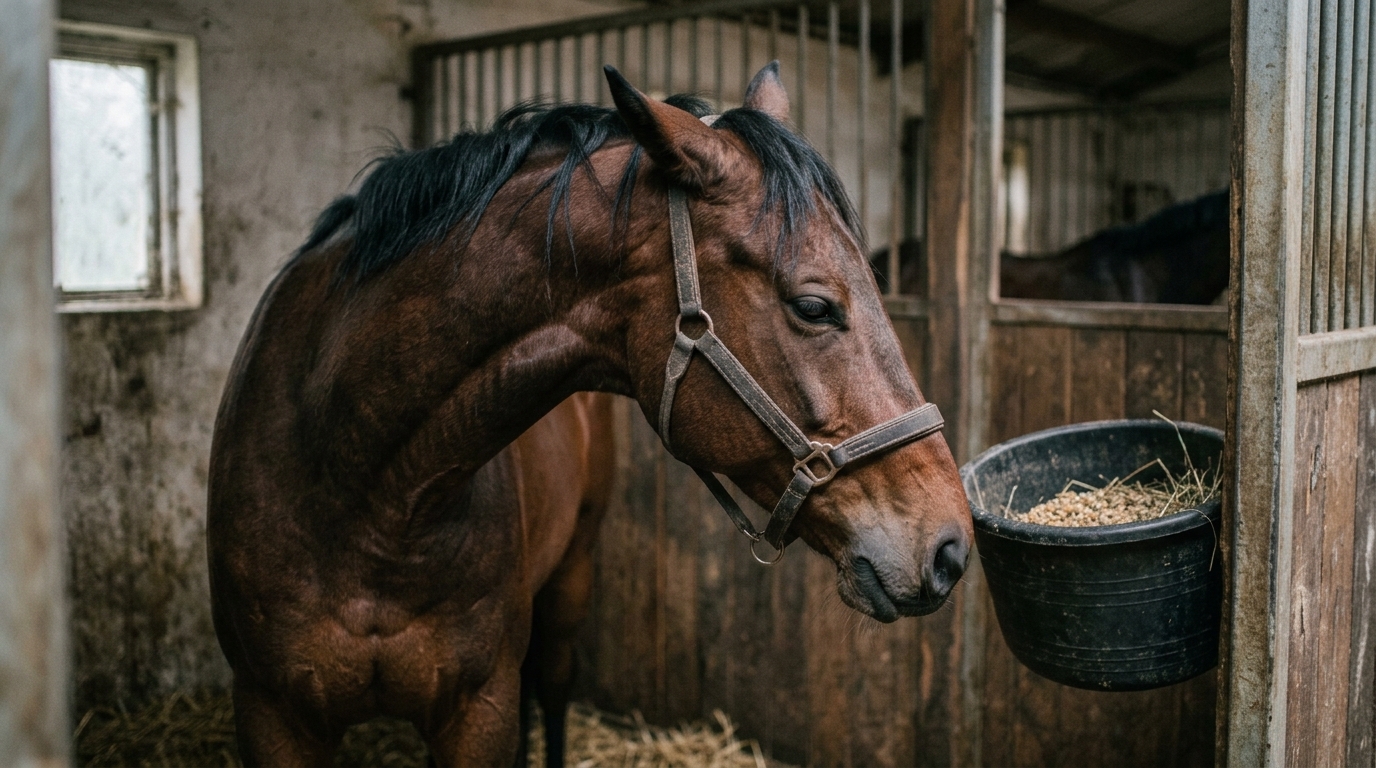
There are two main types to be aware of:
Equine Squamous Gastric Disease (ESGD)
This is the more common of the two. It affects the upper part of the stomach, which has very little natural protection against acid. When a horse exercises on an empty stomach or goes without forage for too long, acid splashes up into this vulnerable zone and causes damage.
Equine Glandular Gastric Disease (EGGD)
This one affects the lower portion of the stomach, an area that's naturally tougher and more acid-resistant. It's less well understood, but stress appears to play a big role, along with a breakdown in the stomach's natural mucus protection.
How Do You Know If Your Horse Has Gastric Ulcers?
This is where things can get tricky. EGUS doesn't always announce itself loudly. Sometimes the signs are so gradual you almost don't notice them until you look back and realise your horse hasn't quite been themselves for a while.
Here's what to watch for:
- A change in appetite – turning their nose up at feed, dropping grain, or being fussier than usual
- Weight loss or a drop in condition even when you haven't changed their diet
- A dull, flat coat (often one of the first things owners notice)
- Girthiness or flank sensitivity – some horses become noticeably cranky when being tacked up
- Reluctance under saddle – unwillingness to go forward, accepting contact, or working through the back
- Recurring low-grade colic – mild discomfort that keeps coming back, particularly after feeding
- Crib-biting or wind-sucking – these stereotypies can be linked to gastric discomfort
If a few of those ring a bell, it's time to call your vet. A gastroscopy is the only way to properly confirm gastric ulcers in horses and figure out exactly what you're dealing with.
What Puts Horses at Risk?
Understanding the triggers helps you get ahead of the problem. Some of the most common risk factors include:
- Going too long without food (acid keeps building with nothing to buffer it)
- High-starch, grain-heavy diets that increase acid production and can inflame the stomach lining
- Hard training or competition schedules – both physical and mental stress contribute
- Travelling stress plus reduced forage access is a tough combination
- NSAID use (anti-inflammatory medications can strip back the stomach's natural mucus protection)
- Changes in routine. Horses thrive on consistency, and upheaval can trigger stress-related EGGD
Getting the Basics Right: Feeding and Management
Before you look at adding anything to your horse's feed, it's worth making sure the foundations are solid. Small changes here can make a bigger difference than any supplement on its own.
Keep the Hay Coming
The simplest thing you can do is make sure your horse always has something to chew. Hay, haylage, or pasture – the more continuous, the better. Slow-feed hay nets are great for stretching out feeding time, particularly overnight or when horses are stabled.
Ease Back on Grain
If your horse's ration is heavy on cereal grains, that's worth reviewing. High-fibre alternatives like soaked beet pulp or lucerne chaff are much gentler on the stomach. If you do feed hard feed, splitting it into smaller, more frequent meals reduces the acid hit each serve creates.
Give Them a Bite Before Work
A small handful of chaff 20–30 minutes before exercise can do more than you'd expect. It forms a physical buffer that helps stop acid from splashing up into the sensitive part of the stomach during work. Simple, cheap, and worth making a habit.
Get Them Outside
Grazing is the most natural form of acid buffering there is. Maximising turnout, even just a bit more than you're currently doing, can make a real difference for at-risk horses.
Where Horse Supplements Fit In
Once your management and feeding routine is working well, horse gut supplements can add a meaningful layer of support, either during recovery or as an ongoing preventative.
Digestive EQ is one of the most popular horse gut supplements used by Australian horse owners. It's formulated to support the stomach lining and maintain a healthy gut environment day to day, making it a great option for horses prone to sensitivity or those coming through a treatment period.
If your vet has confirmed ulcers, particularly EGGD, they may also suggest Sucralox for horses as part of the treatment plan. It's a sucralfate-based product that helps coat and protect the damaged stomach lining, and is often used alongside omeprazole therapy to support healing from the inside out.
When you're choosing horse supplements to support gut health, these are the ingredients worth looking for:
- Calcium and magnesium act as natural acid buffers
- Pectin-lecithin complex creates a protective coating over the stomach lining
- Marshmallow root and slippery elm are soothing herbs that help calm irritated tissue
- Prebiotics and probiotics keep the hindgut microbiome balanced, which flows through to overall digestive health
You can explore our full range of horse gut supplements at Scone Equine Group. We carry options suited to everything from daily maintenance to active gut support.
Don't Skip the Vet
It's tempting to try adjusting feed and adding a supplement and see how things go, but if you suspect EGUS, please get a proper diagnosis first.
Knowing whether you're dealing with ESGD, EGGD, or a combination of both will directly shape the treatment approach, including which horse supplements and medications will actually help.
Get Your Horse Feeling Better with Scone Equine Group
Gastric ulcers in horses are very manageable once you know what you're working with. Most horses respond well to the right feeding changes, reduced stress, and appropriate support from quality horse gut supplements.
The key is not waiting until things get serious. The earlier you pick up on the signs and get a diagnosis, the quicker your horse can start feeling like themselves again.
Browse our range of horse supplements at Scone Equine Group, or get in touch with our team if you need a hand finding the right product for your horse.