
Equine Eye Problems: Ulcers, Conjunctivitis, Uveitis
25th Aug 2026
A horse's eyes work hard, and because horses are prey animals, good vision matters for their confidence as much as their comfort. The good news is that a horse eye ulcer, conjunctivitis in horses, and equine uveitis all respond well when they're caught and treated early.
At Scone Equine Group, our vets treat eye conditions regularly, and one thing holds true across all of them: any change in your horse's eye is worth a prompt call to your vet. Here's how to tell these three common conditions apart and what treatment usually involves.
Key Takeaways
- A horse eye ulcer needs urgent veterinary attention, since infection can take hold and worsen quickly.
- Conjunctivitis in horses often looks similar to more serious eye conditions, so it's worth ruling those out first.
- Equine uveitis is a leading cause of vision loss in horses when it isn't managed properly.
- Watch for squinting, tearing, redness, or cloudiness in either eye, and treat any of these as a reason to call your vet.
- Never apply eye medication without veterinary guidance, since the right treatment depends entirely on the underlying cause.
Why Horse Eye Health Deserves Quick Attention
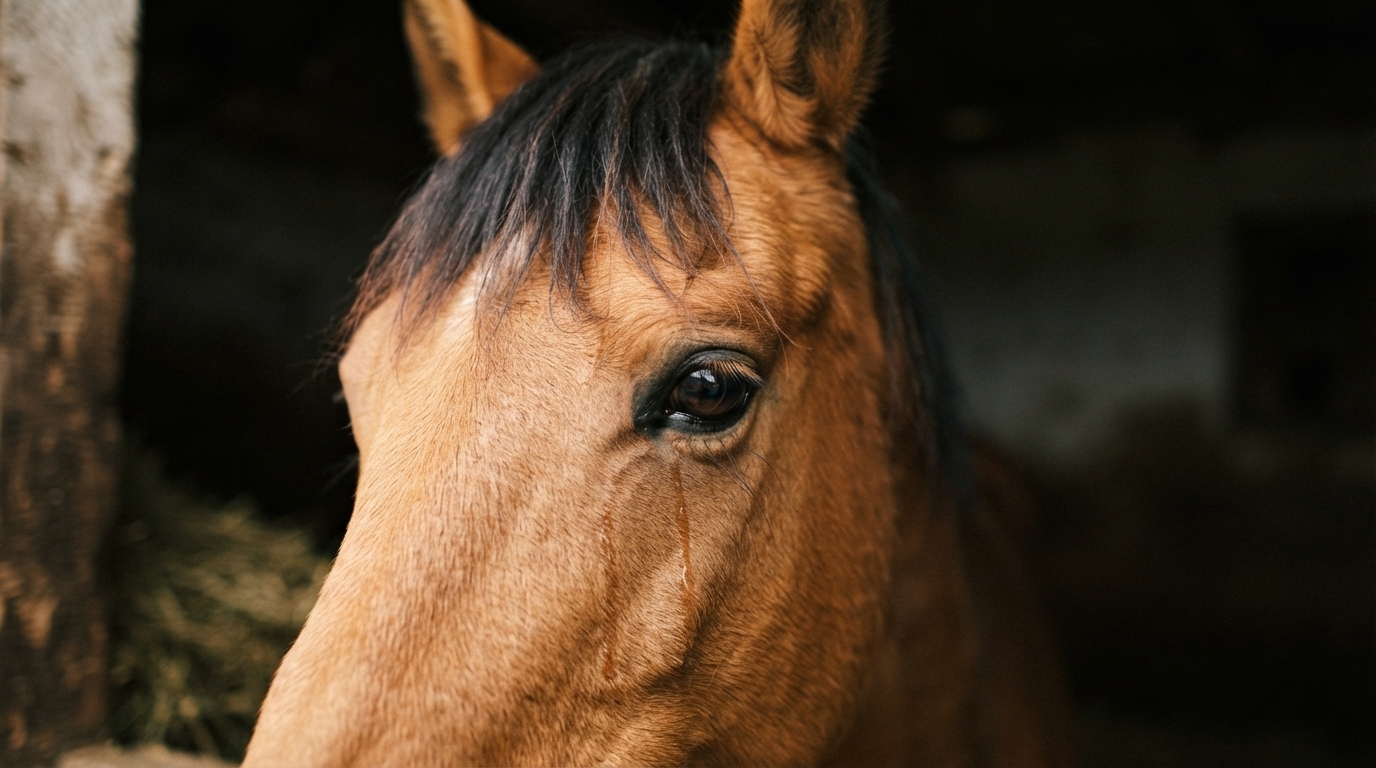
The horse eye sits fairly exposed on the side of a large head, which makes it more prone to knocks, scratches, and irritation than we might expect. On top of that, several eye conditions can look almost identical in the early stages despite needing very different treatments.
That's why any of these three conditions is worth having examined properly, even when the eye doesn't look too dramatic at first glance.
Horse Eye Ulcer: Signs & Treatment
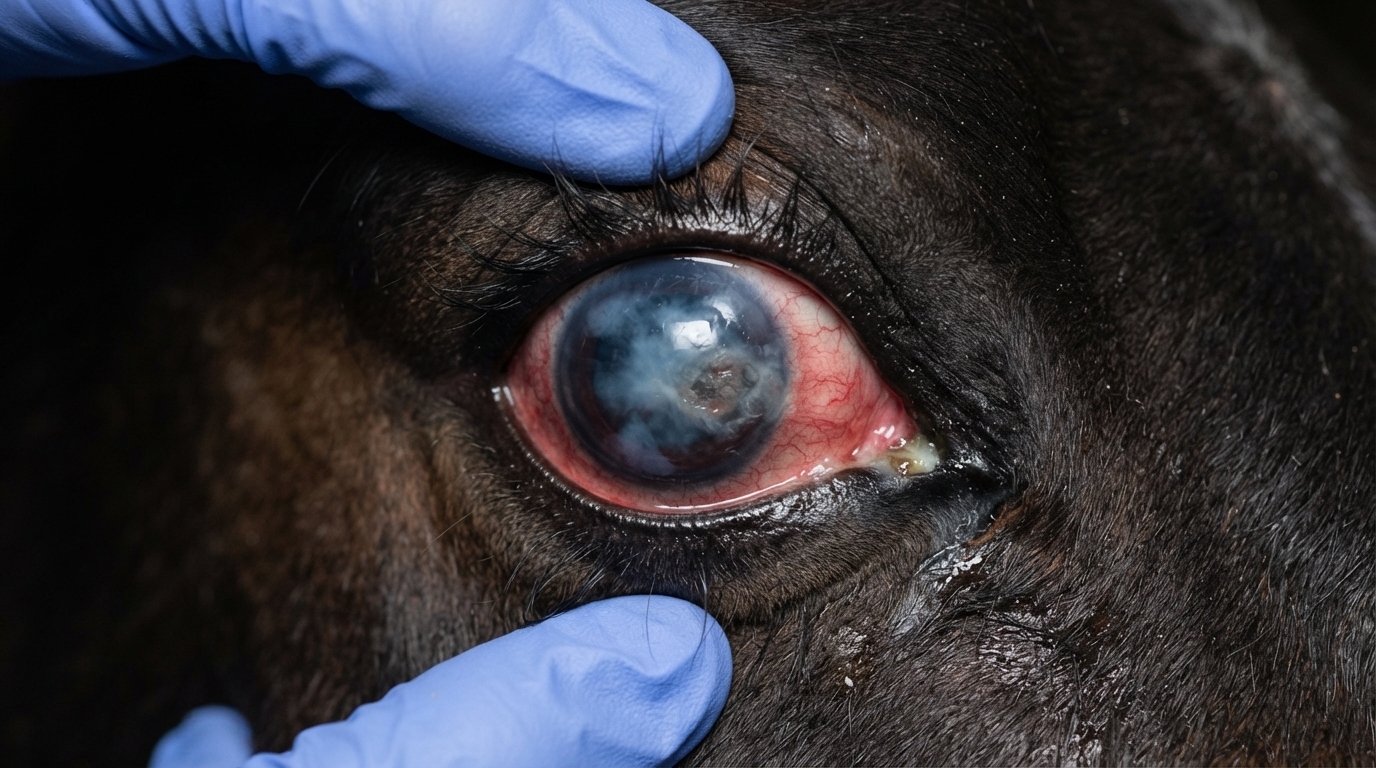
A horse eye ulcer forms when the surface of the cornea is damaged, most often from a scratch caused by hay, dust, a stray branch, or a knock from another horse. Common signs include:
- Squinting or holding the eye partly closed
- Excessive tearing
- Redness around the eye
- A cloudy or blue-tinged appearance to the cornea
- Sensitivity to light
This kind of injury is considered a genuine emergency in equine practice, since infection can set in and progress far more quickly in horses than in most other animals. Your vet will usually stain the eye to assess the extent of the damage, then prescribe targeted treatment, such as antibiotic drops and medication to keep the pupil comfortable as it heals. Steroid-based drops are generally avoided unless a vet has confirmed it's safe, since they can make some infections worse rather than better.
Conjunctivitis in Horses: Signs & Treatment
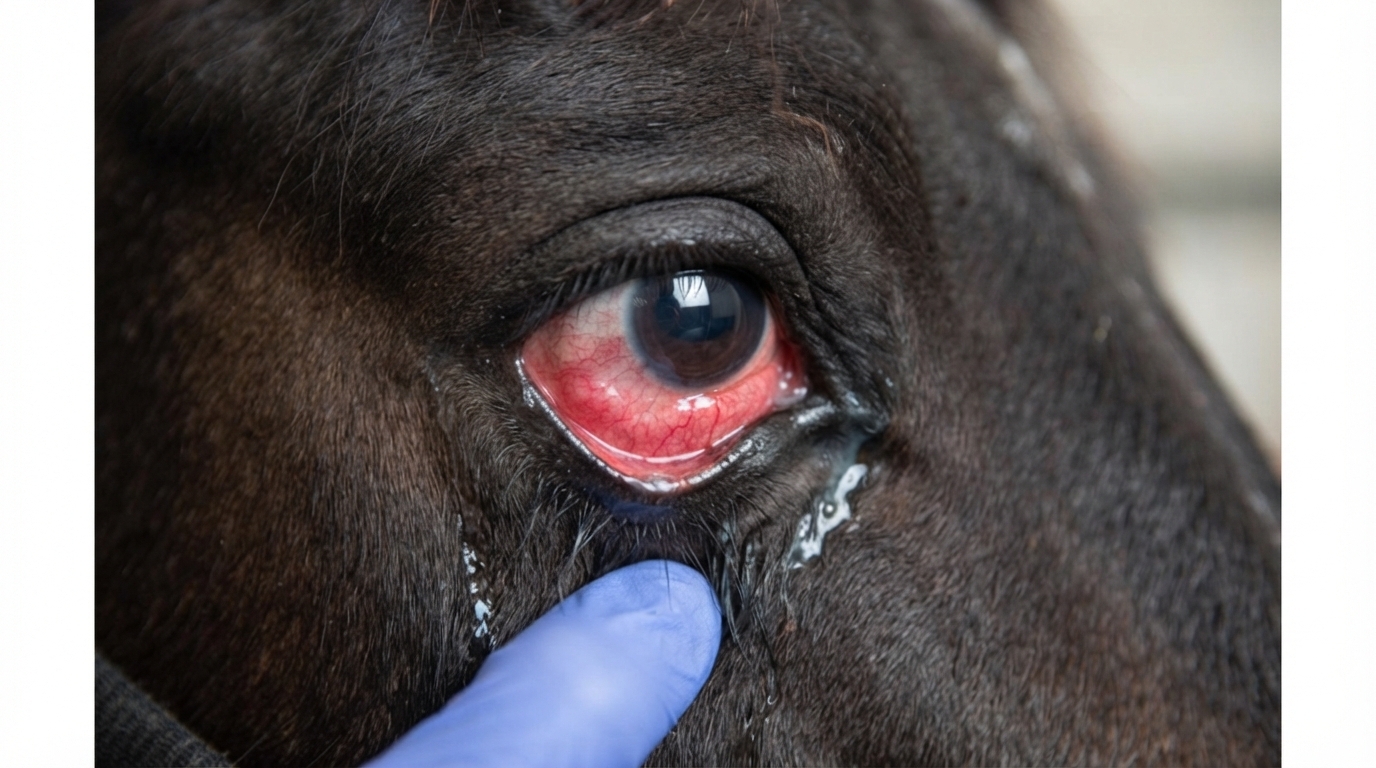
Conjunctivitis in horses is inflammation of the pink membrane lining the eyelid and surface of the eye. It's usually less painful than an ulcer, though the two can look surprisingly similar early on. Signs to watch for include:
- Redness of the eyelid or surrounding tissue
- Watery to thicker discharge
- Mild swelling
- Occasional squinting, though usually milder than with an ulcer
Common triggers include dust, pollen, flies, and minor irritants, though bacterial or viral infection can also play a part. Because conjunctivitis in horses can sometimes mask a more serious underlying issue, a vet check helps confirm what's really going on before starting treatment.
Equine Uveitis: Signs & Treatment
Equine uveitis is inflammation of the deeper structures inside the eye, including the iris and surrounding tissue. It's one of the leading causes of vision loss in horses, particularly when it becomes recurrent, sometimes known as moon blindness. Appaloosas appear to be more prone to severe or recurring episodes than other breeds.
Signs of equine uveitis include:
- Noticeable sensitivity to light
- Excessive tearing and squinting
- A smaller pupil than usual
- Cloudiness or a change in the colour of the eye
Because this condition can flare up more than once, ongoing management with your vet makes a real difference in protecting long-term vision. Treatment usually combines anti-inflammatory medication with addressing any underlying cause, and horses with a history of it often benefit from a consistent monitoring routine to catch flare-ups early.
Caring for Your Horse's Eyes Every Day
Good daily habits go a long way toward protecting your horse's eyes. Checking both eyes during grooming means you're likely to notice early signs of tearing, squinting, or cloudiness before they progress.
A well-fitting mask with built-in horse sun protection can help reduce glare and UV exposure, making it a helpful addition for horses prone to eye sensitivity or recurrent uveitis.
It's also worth keeping a wound cream for horses on hand for any cuts or grazes around the eyelids and face, since these areas heal best when treated properly and promptly rather than left to sort themselves out. Pairing this with a stocked set of equine first aid supplies means you're ready to respond the moment something looks off, rather than scrambling to find what you need.
Browsing horse care products online ahead of time, before you actually need them, is one of the simplest ways to make sure your first aid kit is ready for whatever comes up.
Protect Your Horse's Vision with Scone Equine Group
Recognising the signs of a horse eye ulcer, conjunctivitis in horses, and equine uveitis early gives your horse the best chance of a full recovery.
Discover equine vet supplies at Scone Equine Group and keep your first aid kit ready to support your horse's eye health all year round.