
How to Treat an Open Wound on a Horse
24th Feb 2026
Whether it's a scrape from a fence, a cut from a mysterious sharp object in the paddock, or a gash that appeared out of nowhere, accidents and injuries are an inevitable part of horse ownership. That’s why it's so important to know how to treat an open wound on a horse quickly and effectively. Often, your response can make the difference between a minor inconvenience and a serious health complication.
The good news is that most wounds can be managed at home with the right supplies and knowledge. The key is acting fast, keeping things clean, and knowing when to call for professional help.
The Quick Answer
- Stay calm and safely restrain your horse before assessing the wound
- Control any active bleeding with direct pressure
- Clean the wound thoroughly with saline or diluted antiseptic
- Apply appropriate wound care products and bandage if needed
- Contact your vet for deep wounds, wounds near joints, or any injury causing lameness
- Monitor daily for signs of infection during the healing process
Types of Wounds You Might Encounter
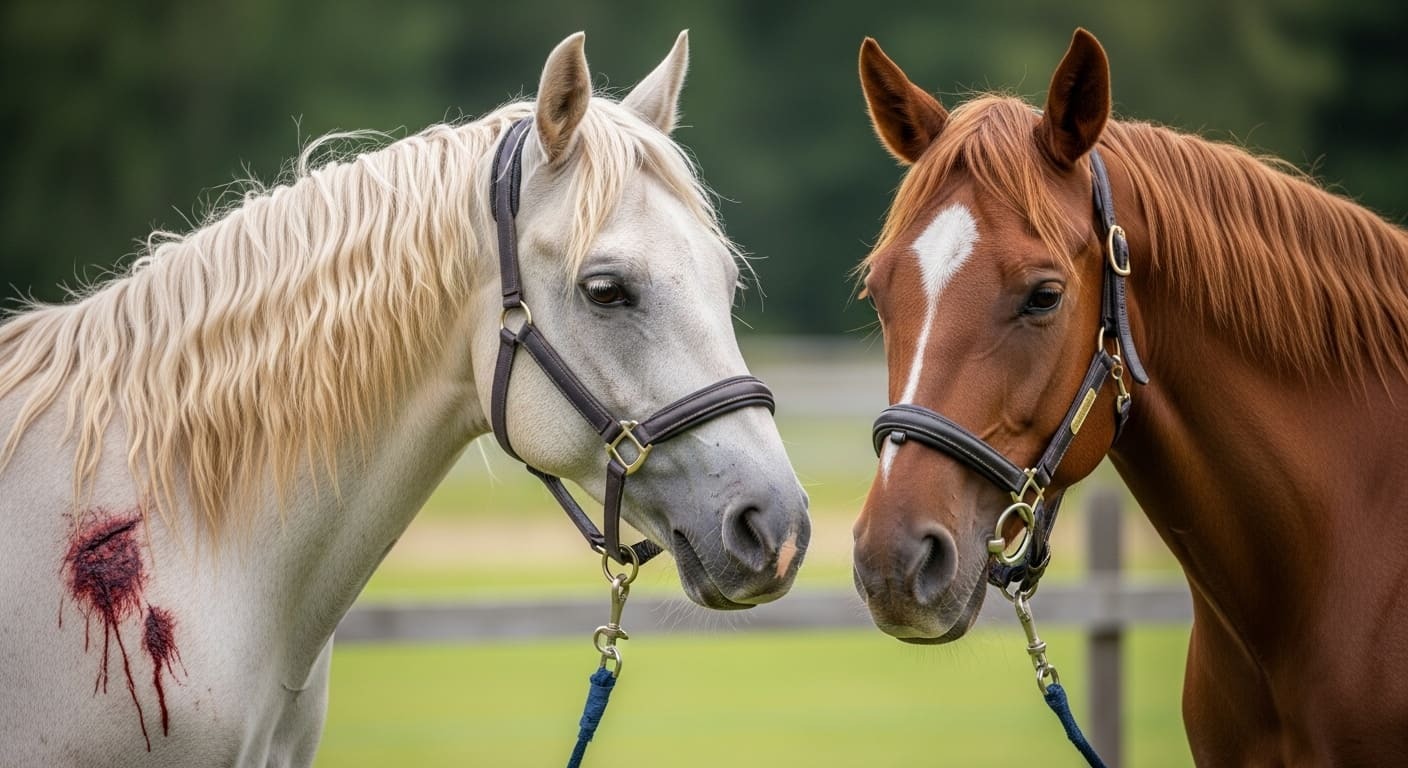
Understanding what you're dealing with helps determine the best course of action. Here are a few common types of wounds you might encounter:
- Abrasions (scrapes): These superficial wounds affect only the outer layers of skin. They're common, usually minor, and heal well with basic care.
- Lacerations (cuts): These have jagged, torn edges and may involve deeper tissue. They're prone to infection and often need to heal as open wounds rather than being sutured.
- Incised wounds: Clean cuts with smooth edges, often from sharp objects. These can sometimes be stitched, stapled, or glued closed if treated promptly.
- Puncture wounds: Deceptively dangerous. The small entry point can hide extensive damage beneath the skin, and these wounds have the highest risk of tetanus infection. Never seal a puncture wound closed.
How to Treat an Open Wound on a Horse: Step-by-Step Care
Once you've assessed the situation and determined it's safe to proceed, follow these steps.
Step One: Assess the Situation Safely
Before you rush in to help, take a moment to evaluate your surroundings. An injured horse may be frightened and unpredictable, so your safety comes first.
If possible, have a second person help you: one to hold the horse and one to tend to the wound. Get a halter and lead rope on your horse if they're loose, and move them to a safe, well-lit area where you can work.
Do a quick overall assessment:
- Look around for signs of blood loss. Even if the wound has stopped bleeding by the time you find it, blood on bedding, fencing, or the ground can tell you how much your horse has already lost.
- Run your hands over your horse's legs and body, checking for other injuries you might have missed. Note their breathing and heart rate.
- If your horse seems distressed, is sweating heavily, has pale gums, or won't put weight on a limb, call your vet immediately.
Step Two: Control the Bleeding
If the wound is actively bleeding, apply direct pressure with a clean cloth, gauze pad, or even a clean nappy or sanitary pad (these are highly absorbent and work brilliantly in emergencies). Hold firm pressure for several minutes without peeking.
For leg wounds that won't stop bleeding, you can apply a pressure bandage using bandage wraps for horses. Layer a non-stick pad over the wound, wrap with padding, then apply a self-adhesive bandage like Vetwrap. Don't wrap too tightly, as this can damage tendons.
Step Three: Clean the Wound
Cleaning is crucial and should happen as soon as possible. Bacteria multiply rapidly in wounds, so the sooner you flush out debris and contaminants, the better.
Use one of these solutions:
- Plain saline (mix two tablespoons of table salt in one gallon of clean water)
- Diluted betadine solution (the colour of weak tea)
- Diluted chlorhexidine solution
- Clean tap water if nothing else is available
Gently flush the wound, allowing the liquid to wash away dirt, debris, and bacteria. Avoid scrubbing, as this can damage tissue and push contaminants deeper.
If there's a foreign object in the wound, small items can be carefully removed, but leave large or deeply embedded objects in place for your vet to handle. They may need to take radiographs first.
Step Four: Clip the Hair (If Needed)
If hair is getting into the wound or obscuring your view, carefully clip around the edges. Cover the wound with a wet gauze pad first to catch the clipped hair and prevent it from falling into the injury. Use electric clippers rather than scissors to avoid accidentally cutting your horse.
Step Five: Apply Wound Care Products
Once clean, apply an appropriate topical treatment. A wound spray for horses or hydrogel helps keep the wound moist, which actually speeds healing by up to 30% compared to leaving wounds uncovered.
For wounds that can't be bandaged, purple spray for animal wounds or aluminium spray products create a protective barrier against dirt and flies. However, avoid using wound powders or coloured sprays if there's any chance your vet might need to suture the wound, as these can be difficult to clean out.
Horse first aid kit supplies should include a range of options so you're prepared for different wound types and locations.
Step Six: Bandage the Wound
For wounds on the lower legs, bandaging is almost always beneficial. It keeps the wound clean, holds medication in place, and the gentle pressure helps prevent proud flesh from developing.
To bandage properly:
- Apply a non-stick wound pad directly over the injury
- Wrap with padding (cotton wool or combine roll)
- Secure with a self-adhesive bandage, wrapping clockwise on right legs and counter-clockwise on left legs
- Apply tape at the top and bottom to keep dirt out and prevent slipping
Change bandages daily while the wound is still draining, then every two to three days as healing progresses.
When to Call the Vet
While many wounds can be managed at home, some require professional attention. Contact your vet immediately if:
- The wound is near a joint, tendon sheath, or involves bone
- The wound is deep, gaping, or exposes underlying structures
- Your horse is lame or won't bear weight on the limb
- Bleeding won't stop despite pressure
- There's a puncture wound (especially on the foot)
- The wound is on the face, near the eyes, nostrils, or lips
- You see signs of infection: heat, swelling, discharge, or foul odour
- Your horse shows signs of shock
Wounds near joints are particularly concerning. If bacteria enter the joint space, the infection can become life-threatening very quickly. Your vet may need to flush the joint under anaesthesia.
For more guidance on handling emergencies, our general horse first aid guide covers the essentials every horse owner should know.
Ongoing Wound Management
Healing takes time. Most wounds need two to four weeks to form the first layer of new tissue, and full healing can take much longer.
During recovery:
- Monitor the wound daily for signs of infection
- Keep bandages clean and dry
- Watch for proud flesh (excessive granulation tissue that looks like puffy red cauliflower)
- Ensure your horse is up to date on tetanus vaccination
- Keep your horse in a clean, dry environment
- Restrict turnout if needed to prevent reinjury
If proud flesh develops, contact your vet. It prevents normal healing and usually needs to be trimmed back or treated with specific products.
Simple Ways to Prevent Wounds from Occurring:
It’s impossible to prevent every injury ever. But you can try to reduce injury risks with some simple hacks like:
- Regularly checking paddocks and stables for sharp edges, broken fencing, and protruding nails
- Remove hazards like old machinery, wire, and debris
- Ensure gates and latches are horse-safe
- Keep your horse's tetanus vaccination current
- Maintain a well-stocked first aid kit so you're always prepared
Remember: When in Doubt, Call Your Vet
At Scone Equine Group, we offer essential wound care supplies and first aid kits to help you manage minor injuries at home. But not every wound is a DIY fix. Some injuries need expert veterinary care to heal correctly and prevent serious complications. Don’t take chances. Your horse's health should always come first.